Mike
Morris.
Mike
Morris.
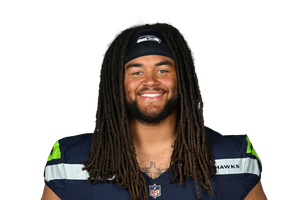
 Michigan· 6'5"· 275 lb· 4.95s 40
"Morris is a length-and-leverage edge setter whose lone breakout season sold traits the pass rush never fully backed up, and the pro projection always ran through a move inside."Pre-draft read
Morris was Michigan's big-bodied edge setter, a long-armed defensive end who lined up almost exclusively on the strong side and won with mass and leverage rather than bend. His game started in the run fit: he stabbed with heavy hands, locked out the tight end or tackle, and squeezed the C-gap shut before shedding late to the ball.
The secondary trait was inside power on passing downs, where Michigan slid him to a 4i or 3-technique and let his size overwhelm guards. He was a better run defender than a speed rusher — the get-off was average, the ankle flexion limited — but the long-arm bull collapsed pockets from the outside in. The signature was length: few 2023 edges could stack, extend and re-establish the line of scrimmage this easily.
Attacking four-man front that asks its strong-side end to set a hard edge on early downs and reduce inside to a 4i or 3-technique on passing downs.
Year 1: early-down run-stopping end who slides inside in sub packages. Ceiling: starting base end in a one-gap front who plays 500-plus snaps as a heavy interior rusher.
A wide-9 speed-rush system that leaves him on an island against pass sets and asks him to win the arc with bend he does not have.
Everything hinges on where the weight settles: at 290 he is an edge, at 305 he is an interior rotation piece.
Highlights: Michigan's Mike Morris | 2023 NFL Draft
Michigan Athletics draft-year reel showing the long-arm bull rush and edge-setting work against Big Ten tackles.
Mike Morris 2022 Highlights
Full 2022 breakout season cut-up: 11.0 TFL and 7.5 sacks built on hand placement and power conversion.
NFL Draft Profile: Michigan EDGE Mike Morris
Pre-draft breakdown of the frame, run-defense value and the bend limitations that pushed him to Day 3.
A fifth-year senior who arrived at Michigan as a raw, oversized athlete and left as the Big Ten Defensive Lineman of the Year, Morris is a power-based edge defender whose identity is built on length and point-of-attack control. He is a strong-side end in a four-man front first and a pass rusher second, and everything he does well flows from his ability to get his hands inside and dictate the block.
The 2022 tape is the case for him. In 12 games he posted 23 tackles, 11.0 tackles for loss and 7.5 sacks, and he did it with a heavy-handed, low-variance style rather than an explosive first step. The flags were just as clear: he was a one-year producer whose first three seasons yielded a single half-sack, an ankle issue slowed him down the 2022 stretch, and his rush plan leaned almost entirely on the long-arm without a counter when the initial punch missed.
The board read him as a Day 3 developmental piece with a defined role: teams that valued the run defense and length had him in the fourth-to-fifth range, while pass-rush-first boards pushed him lower. Seattle taking him at 151 was a bet on frame and traits with a likely position change built into the projection.
- 01
Length at the point
He gets his hands on the tackle's frame first and locks out, which lets him control the C-gap and shed on his own terms instead of getting washed.
- 02
Power conversion
The long-arm bull is his best rush move; he walks tackles into the quarterback's lap and shrinks the pocket even when he does not finish the sack.
- 03
Run defense identity
He sets a hard edge against down blocks and kick-outs, keeping his outside arm free and forcing the ball to bounce back into pursuit.
- 04
Inside versatility
Michigan slid him to a 4i and 3-technique on passing downs and his mass consistently created movement against guards.
- 05
Production spike
The 2022 breakout (11.0 TFL, 7.5 sacks in 12 games) showed what the traits look like when the technique catches up.
- 01
No bend
He cannot flatten the arc or dip under a set tackle, so pressure has to come through the blocker rather than around him.
- 02
Average get-off
The first step does not threaten vertically, letting offensive tackles set flat and wait for the punch instead of retreating.
- 03
One-move rush plan
When the long-arm is absorbed there is little counter; the inside spin and cross-chop are underdeveloped.
- 04
One-year sample
Three seasons produced half a sack before the 2022 spike, and a late-season ankle issue clouded the finish.
— — — positional median (p50)
- 40 yd
- 4.95sp50
- Vertical
- 28.5inp50
- Broad jump
- 110inp50
- Three-cone
- —s
- Shuttle
- —s
- Bench
- 22repp50
| Yr | Team | G | Tkl | Sk | Int | PD | FF |
|---|---|---|---|---|---|---|---|
| 2020 | Michigan | 1 | 1 | 0 | 0 | 0 | 0 |
| 2021 | Michigan | 14 | 16 | 0.5 | 1 | 1 | 0 |
| 2022 | Michigan | 12 | 23 | 7.5 | 0 | 3 | 1 |
| Career | — | 27 | 40 | 8 | 1 | 4 | 1 |
Verified against cfbstats.com player 1104295 (Michigan, 2020-2022). Season sums reconcile with the career line: 1+16+23 = 40 tackles, 1.0+11.0 = 12.0 TFL, 0.5+7.5 = 8.0 sacks, 1+3 = 4 pass breakups. cfbstats published no tackles-for-loss, sacks or misc. defense tables for the 2020 season and no interception table for 2022, so those splits are left null rather than zero-filled. Fumble recoveries were never published for any season.
A dash means the figure is not published by a source we trust — never a zero we invented.
Big-bodied lineman who found his living inside on passing downs and stuck as a rotation starter more than a rusher.
Power-based edge who never won with bend but converted speed to power well enough to be a double-digit-pressure starter.
Length-and-effort defensive lineman who bounced between end and tackle as a run-down rotation body without pass-rush production.
Everything above is the pre-draft evaluation. This section is what actually happened — updated year over year.
Seattle drafted Morris as a developmental edge and immediately hit turbulence: he played one game as a rookie in 2023 before a shoulder injury landed him on injured reserve in September, wiping out the year. He returned in 2024 in a reserve role along the defensive line and on special teams, appearing in 15 games with four tackles and no sacks as the staff pushed him further inside and let his weight climb toward true defensive tackle size. By 2025 he was a full-time rotational body: 17 regular-season games, 16 tackles, one pass defensed, and all 20 games across Seattle's Super Bowl LX run, where he tied for the team lead with four special teams tackles in the postseason.
In hindsight the evaluation was closer to right than the box score suggests, just not in the way anyone drafted him for. The pass-rush questions were real — three seasons and 33 games have produced zero NFL sacks — and the lack of bend that showed on Michigan tape never got solved. What did translate was the length, the run-fit discipline and the frame's ability to carry weight, which turned him into a useful interior rotation and special teams piece rather than the edge rusher on the draft card. For pick 151, a player who survives four years and contributes on a championship roster is a fair return, but the ceiling bought on traits never showed up.