
Kelee
Ringo.
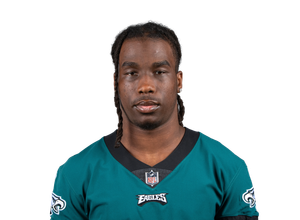
Kelee
Ringo.
 Georgia· 6'2"· 207 lb· 4.36s 40
"Ringo was the rare corner who ran like a sprinter and hit like a safety, and the entire evaluation came down to whether that speed could bail out eyes that wandered whenever he played zone."Pre-draft read
Ringo lived on the boundary in Georgia's press-heavy structure, a 6-2, 207-pound corner with legitimate track speed and the arm length to stall releases at the line. His signature rep is the vertical one: two-hand jam, clean hip turn, and a recovery gear that erases the half step most big corners concede down the sideline.
The second layer is run support. He triggers downhill from off-alignment and arrives with real weight behind the shoulder, which is why Georgia trusted him on the perimeter against gap runs. What separates him from other long corners is pure speed rather than feel: he is never stacked once he is running, but he plays a beat late on quick game underneath and lets completions live in front of him.
Fangio two-high
Immediate special teams ace with a ceiling to develop into a starting strong safety capable of playing close to the box or covering tight ends.
A purely single-high safety system that demands elite deep range.
Ringo's size, speed, and physicality will allow him to contribute early in a scheme that values versatile defensive backs who can play multiple roles.
Kelee Ringo Career Highlights (Georgia Star Cornerback)
Georgia CB Kelee Ringo 2022 Highlights
Kelee Ringo Georgia CB Highlights
The tape is a study in physical outliers. Ringo started two full seasons for a national champion, played 30 games, and collected four interceptions and 14 pass breakups without ever being asked to do much beyond ride a boundary receiver down the sideline. In press, he is a problem. He gets his hands on the release, keeps his feet under him through the jam, and runs with anyone in the class.
Where the evaluation gets uncomfortable is the middle of the field. Asked to play with his eyes in match coverage, he loses the second route in his zone and drifts off leverage the moment he peeks at the quarterback. Comeback and dig routes give him trouble because he is tight sinking out of a backpedal, and receivers who can sell vertical and snap back generate separation his speed cannot recover.
That leaves a projection with a wide range. On a defense that plays press-bail with a single high safety and lets him run, he is a starter early. In a zone-match system that asks a corner to process route distribution, he needs a year of tape study before he can be trusted. The frame, the speed, and the tackling willingness make the floor real; the ceiling depends entirely on how fast the mental side catches up.
- 01
Long speed
Track-caliber straight-line speed that lets him carry vertical routes stride for stride and recover phase when a receiver wins the release.
- 02
Press technique
Long arms and a firm two-hand jam that disrupt release timing and knock receivers off their intended stem at the line.
- 03
Run support
Fills with real force from the boundary and finishes tackles on perimeter runs instead of shielding himself from the block.
- 04
Ball production
Four interceptions and 14 pass breakups across 30 games, including a championship-clinching pick-six against Alabama.
- 05
Frame and availability
A 6-2, 207-pound build that held up across 30 games in two seasons against the deepest receiver rooms in the SEC.
- 01
Zone eyes
Loses the second route in his area in match coverage and drifts off leverage the moment his eyes go to the quarterback.
- 02
Short-area quickness
Tight sinking out of a backpedal, which shows on comebacks and digs that ask him to plant and drive downhill.
- 03
Tackling form
Arrives with force but drops his head into contact, turning finishes into misses when a ball carrier moves in space.
- 04
Scheme range
A pure boundary profile with almost no slot reps, which narrows the early roles a defense can hand him.
— — — positional median (p50)
- 40 yd
- 4.36sp50
- Vertical
- 33.5inp50
- Broad jump
- 122inp50
- Three-cone
- —s
- Shuttle
- —s
- Bench
- —rep
| Yr | Team | G | Tkl | Sk | Int | PD | FF |
|---|---|---|---|---|---|---|---|
| 2021 | Georgia | 15 | 34 | 1 | 2 | 8 | 0 |
| 2022 | Georgia | 15 | 33 | 0 | 2 | 6 | 0 |
| Career | — | 30 | 67 | 1 | 4 | 14 | 0 |
A dash means the figure is not published by a source we trust — never a zero we invented.
A big press corner who bounces between rotational and starting work depending on how much man coverage the scheme plays.
The realistic ceiling of a long, physical outside corner who becomes a full-time starter once the zone processing catches up.
Speed and size keep him employed as a fourth corner and core special teamer without ever locking down a starting job.
Everything above is the pre-draft evaluation. This section is what actually happened — updated year over year.
Philadelphia took him in the fourth round and treated him exactly like the developmental project the tape suggested. He spent his rookie year on special teams and in emergency corner packages, then stayed in that role through 2024 while the roster ahead of him got younger and better. Training camp in 2025 cost him the job he was competing for, but injuries in front of him opened the door by late September, and his first start of the season against Tampa Bay was the best defensive tape of his career: four tackles, a pass breakup, and a fumble recovery in a two-high shell that asked him to play more zone than he had ever handled in college. He held a rotational role for the rest of the year and remained on the roster entering 2026.
In hindsight, the fourth round was the right price. Nothing about the projection was wrong — the speed and the press work travelled, the zone processing lagged, and it took three seasons in an NFL classroom before he could be trusted with anything beyond man coverage on the boundary. He has not become the outlier starter the athletic profile teased, but he is a real NFL corner with a role, which for a Day 3 pick at a premium position is a return most teams would take again.