Jay
Ward.
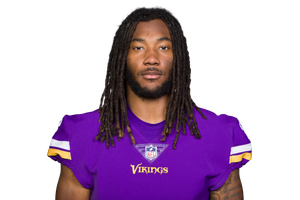
Jay
Ward.
 LSU· 6'1"· 188 lb· 4.55s 40
"Four years of moving around an SEC secondary left LSU with a defender who could line up anywhere on the back end, and left the draft board with no consensus at all on where he actually belonged."Pre-draft read
Ward is a positionless secondary piece who played every coverage job at LSU: corner as a freshman, nickel over the slot in 2021, and split-safety and dime snaps as a senior. His best trait is route anticipation from depth — he reads the quarterback's front shoulder, drives early, and arrives with his hands in the catch window.
The secondary trait is tackling volume from wide alignments; he fits screens and swing passes quickly and rarely loses leverage to the sideline. Against the run he is a scrape-and-fill defender who would rather funnel the ball than take on a block, and the lean frame shows the moment a tight end gets a clean hat on him. The signature is real coverage value at three alignments, not just body-type flexibility.
Multiple, disguise-heavy defense that rotates interchangeable defensive backs (Flores/Fangio-adjacent).
Year 1: core-four special teamer and dime/big-nickel defensive back. Ceiling: starting third safety in a three-safety base package.
A static single-high defense that asks him to play press-man boundary corner or to set the edge against condensed 12-personnel run looks.
His value is in disguise: he can align at nickel and rotate to the post, which only pays off in a defense that rotates late.
Full College Highlights of Safety Jay Ward | 2023 NFL Draft
Full LSU career reel showing his snaps at corner, nickel and safety.
Jay Ward (LSU S #5) Vs. Auburn 2021
Single-game cutup from his first season working primarily inside at nickel.
How Jay Ward's Diverse Skillset Will Benefit the Vikings Defense | Film Room
Vikings film-room breakdown of how Minnesota planned to deploy his positional range.
Ward entered the 2023 class as one of the harder projections in the secondary: a four-year SEC defender with starting reps at corner, nickel and safety, and no single alignment he clearly owned. Evaluators liked the length, the instincts in zone and the willingness to play in the box; they were less sure whether he had the hips to stay outside or the mass to live in the middle of the field on early downs.
The production backed the versatility. He broke out in 2020 with three interceptions and six pass breakups in nine games, then moved inside and posted 71 tackles with two more picks in 2021, and closed with 59 tackles, 2.5 tackles for loss and a fumble return touchdown in 2022 — 163 career tackles, six interceptions and 17 passes defensed across 46 games. The flag was consistency of contact: he arrived a lot, but the finishing was uneven.
The board mostly landed him in the third-to-fourth-round band, with sub-package coverage and core special teams as the floor and a starting nickel or third safety as the realistic ceiling. Minnesota, running a Brian Flores defense built on interchangeable defensive backs and disguised rotations, was as clean a landing spot as the profile could ask for at 134.
- 01
Positional range
Started at outside corner, nickel and safety in the SEC, which gave Minnesota a defender who could be moved by matchup rather than by package.
- 02
Zone anticipation
Reads the quarterback's shoulder from depth, triggers before the throw and consistently shows up in the catch window on curls and crossers.
- 03
Ball production
Six interceptions and 17 passes defensed across four seasons, including a three-pick, six-breakup sophomore year in only nine games.
- 04
Length in the slot
Rangy build lets him contest inside vertical routes and tight-end seams that shorter nickels have to concede on contested throws.
- 05
Special teams value
Played real coverage-unit snaps at LSU and profiled as a Day 1 core-four contributor, which is how fourth-round defensive backs survive.
- 01
Play strength
Lean frame gets displaced when tight ends and pulling linemen reach him, and he prefers to funnel rather than defeat blocks in the alley.
- 02
Tackle finishing
Volume tackler whose contact balance is inconsistent; too many attempts turn into drags and gained yards after first contact.
- 03
Long speed outside
Hips tighten on transitions at boundary corner, so he plays behind the route stem against genuine vertical threats in man coverage.
- 04
No settled position
Four years of moving meant no alignment where the technique was fully refined, which pushed early NFL work into sub-packages only.
— — — positional median (p50)
- 40 yd
- 4.55sp50
- Vertical
- 34.5inp50
- Broad jump
- 132inp50
- Three-cone
- —s
- Shuttle
- —s
- Bench
- 16repp50
| Yr | Team | G | Tkl | Sk | Int | PD | FF |
|---|---|---|---|---|---|---|---|
| 2019 | LSU | 13 | 4 | 0 | 0 | 3 | 0 |
| 2020 | LSU | 9 | 29 | 0 | 3 | 6 | 1 |
| 2021 | LSU | 11 | 71 | 0 | 2 | 4 | 1 |
| 2022 | LSU | 13 | 59 | 0 | 1 | 4 | 0 |
| Career | — | 46 | 163 | 0 | 6 | 17 | 2 |
Verified against Sports Reference CFB season logs; season totals sum to the career line (163 tackles, 6 INT, 17 PD). One interception returned for a touchdown in 2020 and one fumble return touchdown in 2022.
A dash means the figure is not published by a source we trust — never a zero we invented.
The in-house template: a positionless sub-package defender who earns snaps through special teams and disguise value.
Similar box-and-slot flexibility with real coverage snaps, but Dugger brought far more play strength at contact.
A late-round LSU-adjacent DB whose floor is coverage-unit reliability rather than a defined defensive job.
Everything above is the pre-draft evaluation. This section is what actually happened — updated year over year.
Minnesota took Ward as a developmental piece for Brian Flores and used him almost entirely on special teams as a rookie: 17 games in 2023 with five tackles and virtually no defensive role. Year two looked the same — 16 games in 2024, a pass defensed, a couple of tackles, and his first postseason snaps in the Wild Card loss at Arizona. The break came in 2025, when injuries and rotation moved him into real sub-package work: 17 games, 26 total tackles, a fumble recovery, and the first stretch of his career where the defensive coaching staff trusted him in coverage. He opened 2026 back on the Vikings roster in the same swing role behind the top three safeties.
In hindsight this is the fourth round working exactly as designed, just slowly. Ward has never been a starter and probably will not be one, but he has stayed on one roster for four years, played 50 games, contributed on every coverage unit and grown into a usable third-safety body. The versatility that made him hard to grade also made him hard to cut. The evaluation that he needed a defined role was right; the evaluation that a Flores-style defense would find that role for him took two seasons longer than anyone expected.