Dante
Stills.
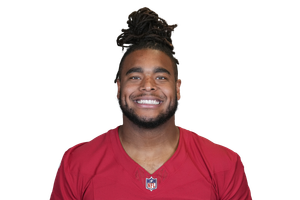
Dante
Stills.
 West Virginia· 6'4"· 286 lb· 4.85s 40
"The get-off was always the whole evaluation, and it turned a sixth-round West Virginia three-technique into a Week 1 rotation player who led an NFL defensive line in sacks before he turned twenty-five."Pre-draft read
Stills is an interior penetrator who lives at three-technique and slides inside on passing downs, and his game is decided in the first half-second. He times the snap as well as any interior lineman in the class, gets skinny through the B-gap before a guard can set his hands, and finishes the move with a violent swipe-rip that keeps his frame clean.
The second trait is a motor that does not idle: he chases screens down the line and finishes plays twenty yards from where they started. Against the run he penetrates rather than anchors, which creates negative plays but also lets combo blocks wash him out. He is not a twitchy freak athlete, but the get-off, the leverage and the hand speed are a genuine NFL package.
One-gap attacking four-man front that lets interior linemen shoot a gap instead of reading blocks
Year 1: 25-35 snaps per game as a sub-package interior rusher and early-down rotational three-technique. Ceiling: a full-time attacking three-technique who gives a front six to eight sacks and steady interior pressure.
Two-gap 3-4 front asking a nose or 5-technique to occupy a center and guard and hold the point on first down — his frame gets driven and the pass-rush juice never gets used.
Needs a coordinator who accepts gap vacancies as the cost of penetration; pair him with a run-plugging nose so his aggression is a feature, not an exposure.
Dante Stills WVU 2021 Highlights
Junior-season reel from his best year: 15.0 tackles for loss and 7.0 sacks built on snap timing and gap penetration.
Dante Stills (#55 West Virginia DL) vs Pittsburgh 2022 (All Plays)
Every-snap senior-year cut-up showing both the get-off wins and the reps where doubles wash him out.
Dante Stills vs Pitt 2022 - High Motor
Focused clip on the pursuit and chase trait that kept him on the field as a rotational interior rusher.
Stills is a five-year West Virginia starter and one of the most productive interior disruptors in program history, a hand-in-the-dirt three-technique whose identity is quickness, leverage and hands rather than mass. He is not built to two-gap and he never pretended to be — every rep is about getting into the backfield before the block arrives.
The production backs the tape. He finished with 52.5 tackles for loss and 23.5 sacks over 59 games, including a 15.0-TFL, 7.0-sack junior campaign that was the best of the Big 12's interior class, and he added six forced fumbles by attacking the ball. The flags are physical: he tested at 286 pounds with the lowest weight percentile in his group, he gets displaced when a center and guard get their hips together, and his 2022 senior tape dipped to 9.0 TFL and 4.5 sacks as offenses started chipping and doubling him.
The board treated him as a Day 3 rotational pass rusher whose frame capped the ceiling, a fourth-to-sixth round range depending on how much a team valued sub-package juice. Arizona took him 213th with almost no risk attached and a defensive line thin enough that snaps were there to be won immediately.
- 01
First-step quickness
Times the snap and covers the first yard before guards can slide, which is the trait that produced 52.5 career tackles for loss on a defense that rarely got leads.
- 02
Hand violence
Uses a fast swipe-rip and a long-arm to shed cleanly, keeping his chest free instead of letting bigger interior blockers latch and steer him.
- 03
Natural leverage
Plays with a low pad level that lets a 286-pound frame hold up under contact and turns pressure into penetration rather than a stalemate.
- 04
Relentless motor
Chases screens and backside runs down the line and has the conditioning to take a heavy snap count without the rush quality falling off.
- 05
Ball production
Forced six career fumbles by ripping at the arm on contact instead of just wrapping, adding takeaway value beyond the sack column.
- 01
Play strength
At 286 pounds he gets moved off the spot when a guard and center combo his shoulder, and he cannot reset the line of scrimmage against downhill run games.
- 02
Anchor versus doubles
Penetration-first technique means he vacates his gap and creates cutback lanes when the block is designed to wash him rather than block him.
- 03
Senior-year dip
Production fell from 15.0 tackles for loss and 7.0 sacks as a junior to 9.0 and 4.5 as a senior once opponents committed extra bodies to him.
- 04
Limited rush plan
Wins with the first move far more than the counter, so when the get-off is neutralized he has no second answer to fall back on.
— — — positional median (p50)
- 40 yd
- 4.85sp50
- Vertical
- 28.5inp50
- Broad jump
- 113inp50
- Three-cone
- 7.38sp50
- Shuttle
- 4.61sp50
- Bench
- 20repp50
| Yr | Team | G | Tkl | Sk | Int | PD | FF |
|---|---|---|---|---|---|---|---|
| 2018 | West Virginia | 12 | 16 | 3 | 0 | 0 | 2 |
| 2019 | West Virginia | 12 | 24 | 7 | 0 | 1 | 1 |
| 2020 | West Virginia | 10 | 35 | 2 | 0 | 2 | 0 |
| 2021 | West Virginia | 13 | 36 | 7 | 1 | 0 | 1 |
| 2022 | West Virginia | 12 | 26 | 4.5 | 0 | 1 | 2 |
| Career | — | 59 | 137 | 23.5 | 1 | 4 | 6 |
2020, 2021 and 2022 verified line by line on cfbstats.com (West Virginia team 768, player 1097978); cfbstats does not archive seasons before 2020, so 2018 and 2019 come from the West Virginia official career record, which matches cfbstats exactly on all three overlapping seasons. Season sums equal the career totals (59 games, 137 tackles, 52.5 TFL, 23.5 sacks, 1 INT, 4 PBU, 6 FF). Fumble recoveries are not tracked in either source and are left null rather than zero-filled.
A dash means the figure is not published by a source we trust — never a zero we invented.
Late-round, short-framed interior lineman who leveraged pad level and motor into a long rotational starting role.
Undersized interior penetrator who turned elite get-off and hand quickness into a decade of high-level three-technique play.
Day 3 lineman with a similar athletic profile who stuck as a rotational body without ever producing meaningful pressure.
Everything above is the pre-draft evaluation. This section is what actually happened — updated year over year.
Arizona put him on the field immediately and never took him off. He played 15 games as a rookie with 44 tackles and 3.5 sacks, leading all Cardinals defensive linemen in both categories, which said as much about the roster as about him but he earned the snaps. Year 2 was better and more defined: 16 games, 38 tackles, 4.5 sacks and a forced fumble, again the team leader up front, working as a starting three-technique in a front that asked him to penetrate rather than hold ground. Year 3 was the reset. Arizona rebuilt the line around bigger bodies, his role narrowed, and he finished 2025 with 17 games, 34 tackles and no sacks. Three seasons in: 48 games, 21 starts, 116 tackles, 8.0 sacks.
The honest read is that pick 213 got a real football player and the evaluation was close to exact. The concerns were correct — he never became a run-down anchor and the pass-rush production tapered once the depth chart around him improved — but the get-off and the motor were real enough to hold a rotation spot from Week 1 of his rookie year onward. That is a clean win at this price, and the only thing missing is the second rush move that would have made him more than a good rotational piece.