Treylon
Burks.
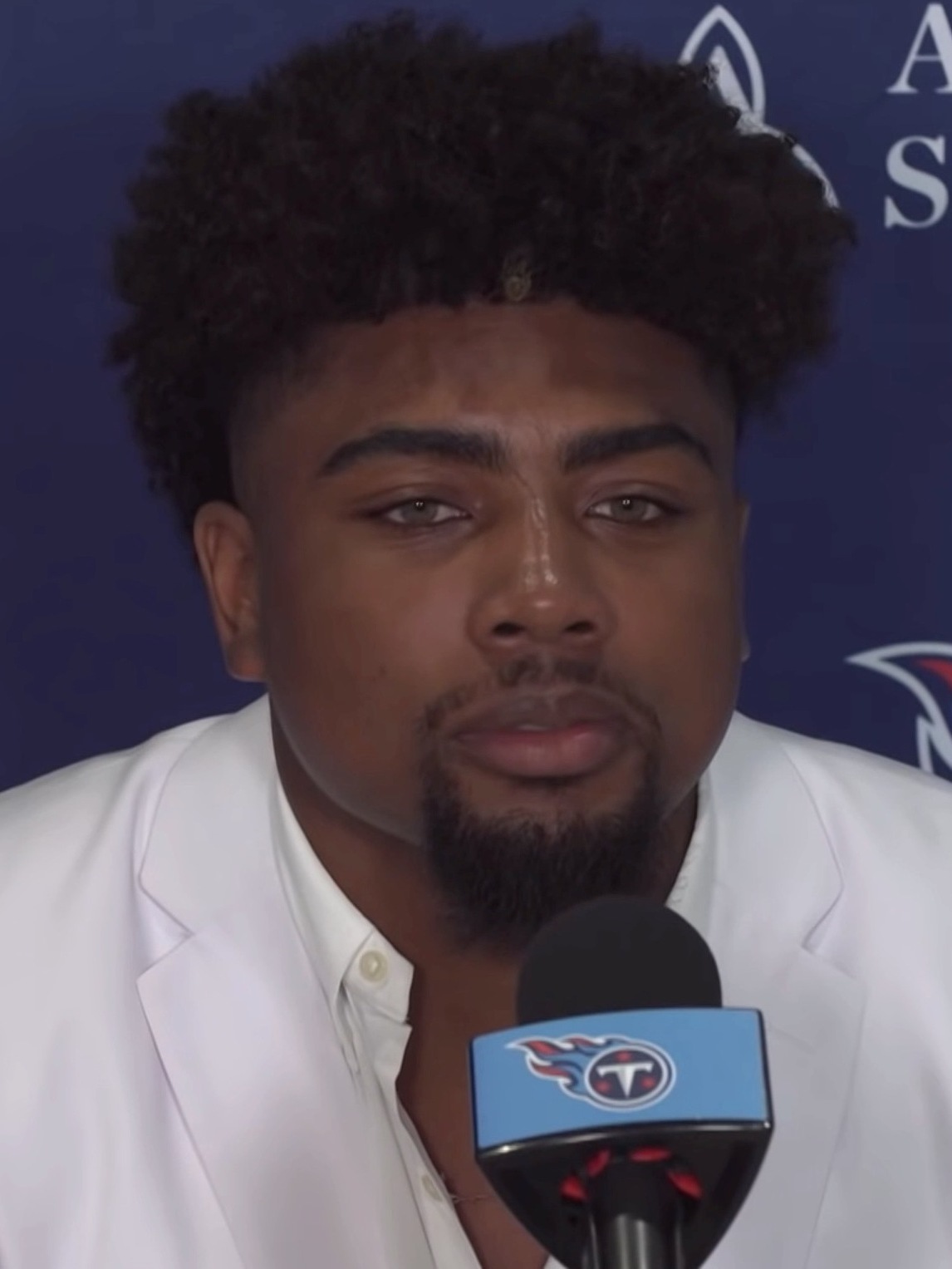
Treylon
Burks.
 Arkansas· 6'2"· 225 lb· 4.55s 40
"Arkansas asked one man to be its entire passing game, and he answered — Treylon Burks was a 225-pound slot receiver who played like a running back the moment the ball touched his hands."Pre-draft read
Burks was a leverage-and-contact receiver, and Arkansas moved him everywhere — slot, outside, backfield, jet sweeps — because the offense had no second answer. Kendal Briles designed touches rather than routes for him, and he caught 66 passes for 1,104 yards in 2021 while facing bracket coverage almost weekly.
His game lived after the catch. Burks ran through arm tackles, stacked defensive backs on crossers and turned six-yard hitches into chunk plays with mass and balance. Down the field he tracked the deep ball naturally and used a wide radius to win outside his frame. What he lacked was a polished route tree — he won with size and body control, not footwork detail.
Play-action, condensed-formation offense that manufactures touches for a big slot
Move-piece receiving weapon who gets four to six designed touches a game and works the middle of the field on crossers and seams
Isolation X role that asks him to defeat press and win a full route tree on the boundary
Best paired with a play-caller who scripts his usage; he loses value when he has to earn everything from a static split.
Arkansas WR Treylon Burks 2021 Highlights
Full 2021 season tape: contested catches, crossers and yards after contact.
Treylon Burks 2021 Arkansas Highlights
Deep-ball tracking and manufactured touches from his final college season.
Treylon Burks Film Breakdown
Route-by-route breakdown of his pre-draft profile and translation questions.
The evaluation started with the production in context. Burks was Arkansas' offense in 2021, drawing the opponent's best corner and safety help while still averaging 16.7 yards a catch, and evaluators who charted him saw a receiver whose target share and degree of difficulty both sat near the top of the class.
The measurables complicated it. He tested at 6-2, 225 with 33 1/2-inch arms but ran 4.55 with a 33-inch vertical and a 7.28 three-cone, athletic numbers that put him in the bottom quarter of the position in change of direction. Teams split on whether that mattered: some read the tape as a big slot who wins with mass and would need scheme help against NFL press, others believed the play speed on crossers and go balls translated regardless of the stopwatch.
The consensus landed on a first-round grade with a defined role rather than a plug-and-play X receiver. Tennessee took him 18th after trading A.J. Brown, which set a comparison nobody asked for and put a rookie into a WR1 job on a run-heavy roster. The projection most scouts wrote was narrower and fairer — a heavy slot and manufactured-touch weapon, best with a play-caller willing to build his usage rather than line him up and let him run routes.
- 01
Contact balance
Burks ran through arm tackles on crossers and screens the way a running back does, turning short throws into first downs against SEC defenses.
- 02
Catch radius
33 1/2-inch arms and 9 7/8-inch hands let him pluck throws outside his frame, and he consistently won the contested ball over smaller corners.
- 03
Ball tracking
natural over-the-shoulder adjustment on deep shots, with the body control to locate late and finish through contact down the sideline.
- 04
Usage versatility
Arkansas lined him up in the slot, out wide and in the backfield, and he handled jet sweeps and gadget carries without any drop in efficiency.
- 05
Production against attention
66 catches for 1,104 yards in 2021 while drawing bracket coverage every week with no complementary threat to relieve him.
- 01
Route detail
beat college corners with size and speed rather than setup, and the stems lacked the tempo variation and separation craft NFL coverage demands.
- 02
Change of direction
a 7.28 three-cone and 33-inch vertical confirmed the tape's stiffness, limiting his answers on option routes and against sudden press corners.
- 03
Long speed questions
4.55 in the forty meant he would not simply run away from NFL safeties, so the deep production had to come from tracking, not separation.
- 04
Conditioning and durability
reported stamina issues in his first camp preceded concussion, shoulder and collarbone injuries that repeatedly cost him availability.
— — — positional median (p50)
- 40 yd
- 4.55sp50
- Vertical
- 33inp50
- Broad jump
- 122inp50
- Three-cone
- 7.28sp50
- Shuttle
- —s
- Bench
- —rep
| Yr | Team | G | Rec | Yds | TD |
|---|---|---|---|---|---|
| 2019 | Arkansas | 11 | 29 | 475 | 0 |
| 2020 | Arkansas | 9 | 51 | 820 | 7 |
| 2021 | Arkansas | 12 | 66 | 1104 | 11 |
| Career | — | 32 | 146 | 2399 | 18 |
A dash means the figure is not published by a source we trust — never a zero we invented.
A physical possession receiver who lives on contact balance and contested catches instead of separation quickness.
The ceiling if a creative offense treated him as a positionless ball carrier and receiver rather than a split-out WR1.
The floor for a big receiver whose testing questions become real when a pro route tree replaces manufactured touches.
Everything above is the pre-draft evaluation. This section is what actually happened — updated year over year.
Treylon Burks has played two seasons for the Tennessee Titans, experiencing some injury issues. He has been a rotational wide receiver, showing flashes but not yet consistent production.
It never took. Burks flashed as a rookie with 33 catches for 444 yards and a touchdown in 11 games, then the career flattened: 16 catches in 2023, four in five games in 2024 with an injury-shortened season, and a 2025 training camp collarbone fracture that ended his time in Tennessee when the Titans waived him from injured reserve in October. Through four seasons he had 63 receptions for 829 yards and two touchdowns in 35 games — production a good NFL slot puts up in six weeks.
The reasons were layered and none of them are simply "he was overdrafted." Availability was the biggest one: conditioning issues as a rookie, then a string of concussions, shoulder and collarbone injuries that cost him most of three seasons. Tennessee's quarterback play and offensive identity never gave him the manufactured-touch usage that made him special at Arkansas, and the A.J. Brown trade framing meant every quiet week became a referendum. Washington claimed him after the release and used him as an auxiliary receiver next to Terry McLaurin, then re-signed him in March 2026 on a one-year deal worth up to $4 million — a reasonable bet on the traits, and an honest verdict on the first round pick.
Data note: from New Orleans via Philadelphia