Malik
Willis.
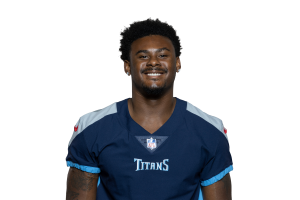
Malik
Willis.
 Liberty· 6'1"· 219 lb
Willis is a dual-threat quarterback built around arm talent and escapability, an off-schedule creator who plays the position the way a running back plays open field. The arm is the headline: he generates elite velocity from compressed, off-platform slots and drives the ball outside the numbers from bases most quarterbacks cannot survive.
The second trait is running ability — 197 carries for 878 yards and 13 scores as a senior, a designed-run and scramble weapon rather than a scrambler by accident. The concern is what happens on schedule: he works late through progressions, invites pressure by holding the ball, and his accuracy drifts inside structure. The signature is the play that should have been a sack and instead becomes 40 yards.
A movement-based offense built on boot, naked and designed quarterback run, with a heavy play-action menu that lets him throw to defined half-field reads instead of full-field progressions.
Year 1: developmental third or backup quarterback with a package of designed runs, sitting behind an established starter while the footwork and progression work gets rebuilt. Ceiling: a starting quarterback in a run-first, play-action offense that never asks him to win from the pocket on third and long.
A timing-and-rhythm dropback system that lives on quick-game progressions and full-field reads from under center — the exact operation his processing speed and platform consistency cannot support.
He needs a play-caller willing to build the first two seasons around his legs and half-field reads, not one who benches him for not being ready to run a pro offense in year one.
Liberty QB Malik Willis 2021 Highlights
Full senior-season reel: off-platform throws, designed runs and the escapability that made him a first-round conversation.
The Most Dangerous Quarterback in the Nation — Malik Willis 2020 Liberty Highlights
The 2020 breakout season that produced the Dudley Award, with the dual-threat volume on full display.
Malik Willis (Liberty QB) vs Virginia Tech 2020
Single-game tape against Power Five competition, the sample evaluators leaned on to test the level-of-competition question.
Willis is the most physically gifted quarterback in this class and the least refined. He throws with a live, effortless arm, creates outside the pocket as well as anyone available, and forces defenses to account for him as a runner on every snap. He is also a quarterback whose best football comes after the first read breaks down, which is a dangerous foundation to build a professional offense on.
The résumé is two years of FBS starting after two seasons buried at Auburn. At Liberty he threw for 2,260 yards and 20 touchdowns in 2020, then 2,857 and 27 in 2021, adding 1,822 rushing yards and 27 scores across the two years. He won the Dudley Award in 2020 and the Bobby Bowden Award in 2021. The flags are structural: 12 interceptions as a senior, a sack rate inflated by holding the ball, inconsistent footwork, and a schedule that rarely tested him against professional coverage disguises.
The board split badly. Some evaluators had him as the first quarterback off the board on traits; others saw a two-year project with no guarantee the processing would ever catch up. He slid out of the first round entirely and Tennessee took the swing at 86, a low-cost bet on the best raw arm in the class with an established starter already in the building.
- 01
Arm talent
Generates elite velocity from any platform, driving outs and deep comebacks from off-balance, compressed slots that would stall most quarterbacks in the class.
- 02
Creation outside structure
Extends plays with genuine escapability and keeps his eyes downfield while moving, turning broken protections into explosives.
- 03
Designed run value
Rushed for 944 yards and 14 scores in 2020 and 878 and 13 in 2021, a legitimate second-level runner who changes how defenses fit the box.
- 04
Deep ball
Comfortable pushing the ball vertically, with the arm strength to attack the boundary from the far hash without cutting the field in half.
- 05
Toughness and competitiveness
Absorbed heavy pressure behind an overmatched line and kept playing aggressively, never shrinking from the moment in Liberty's marquee games.
- 01
In-structure processing
Slow to work through progressions and late to the second read, which drives both the sack volume and the interceptions in the 2021 tape.
- 02
Ball security
Twelve interceptions as a senior plus persistent fumbling under pressure, a turnover profile that a professional defense will punish harder.
- 03
Footwork and base
Drifts in the pocket and throws from inconsistent platforms, so accuracy fluctuates on the routine on-schedule throws that decide games.
- 04
Level of competition
Two years of FBS starting against a Group of Five schedule that rarely showed him the disguised coverages he will see weekly in the NFL.
| Yr | Team | G | Cmp | Att | Yds | TD | Int |
|---|---|---|---|---|---|---|---|
| 2017 | Auburn | 7 | 6 | 7 | 45 | 1 | 0 |
| 2018 | Auburn | 5 | 5 | 7 | 24 | 0 | 0 |
| 2020 | Liberty | 10 | 170 | 265 | 2260 | 20 | 6 |
| 2021 | Liberty | 13 | 207 | 339 | 2857 | 27 | 12 |
| Career | — | 35 | 388 | 618 | 5186 | 48 | 18 |
Liberty 2020 and 2021 read directly from cfbstats. cfbstats does not publish seasons before 2020, so the two Auburn years come from the NCAA's official career table (2017: 6-of-7, 45 yards, 1 TD; 2018: 5-of-7, 24 yards), which matches the 11-of-14 for 69 yards and one touchdown credited to his Auburn tenure. Season totals sum exactly to the career line: 388-of-618 for 5,186 yards, 48 TD, 18 INT, 366 rushes for 2,131 yards and 29 scores in 35 games. Note that aggregators listing 5,176 career passing yards use 2,250 for 2020; cfbstats credits 2,260 and is used here. He did not play in 2019 while sitting out his transfer year, so there is no 2019 season line.
A dash means the figure is not published by a source we trust — never a zero we invented.
A mobile, low-turnover-when-managed backup who wins games as a caretaker but never quite holds a long-term starting job.
The ceiling is a dual-threat starter whose processing catches up in the right development structure and whose legs remain a weekly scheme advantage.
An athletic, well-liked emergency quarterback who bounces between rosters because the in-structure operation never becomes reliable.
Everything above is the pre-draft evaluation. This section is what actually happened — updated year over year.
Malik Willis has played two seasons for the Tennessee Titans, serving as a backup quarterback. He has seen limited starting action and has struggled with consistency in his NFL appearances.
Tennessee never gave the project a real runway. Willis played eight games as a rookie in 2022 behind Ryan Tannehill, went 31 of 61 for 276 yards with no touchdowns and three interceptions in three starts, and looked exactly like a quarterback who needed two years of development. He appeared in three games in 2023, was passed on the depth chart and was traded to Green Bay in August 2024 for a seventh-round pick. There the picture changed: starting for an injured Jordan Love, he went 40 of 54 for 550 yards with three touchdowns and no interceptions in 2024, then 30 of 35 for 422 yards and three more scores in 2025, winning games as a caretaker. He signed with Miami in 2026 and opened the season as the starter.
In hindsight the traits were real and the projection was accurate — both parts of it. The arm and the legs translated; the in-structure processing never became good enough to hold a starting job, which is exactly what the tape said. What the evaluation missed was the environment: Tennessee had no plan to develop him, and it took a change of scenery and a clearly defined backup role for the useful version of Willis to show up. At 86 the pick was cheap enough that it never hurt, but the franchise-quarterback outcome the traits teased never arrived.
Data note: from Las Vegas