Lewis
Cine.
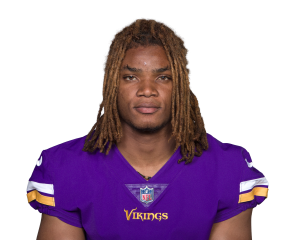
Lewis
Cine.
 Georgia· 6'2"· 199 lb· 4.37s 40
"The enforcer on a national-title defense: a deep safety who covers ground at 4.37 speed and finishes tackles with violence, drafted for range and temperature rather than for takeaways."Pre-draft read
Cine played Georgia's deep safety in a two-high structure that let him roam, and his identity is speed to the football with intent to hurt someone when he gets there. He reads the quarterback from depth, takes efficient angles and arrives at full speed, closing on throws in the flat and over the middle violently.
He is a better run defender than a coverage defender. Downhill fits, alley tackles and screen destruction are where his value lives, and he does it at 4.37 speed. In man coverage his hips are stiffer than his straight-line time suggests, and he can be late out of transitions against option routes. The separator is the collision — he changes how receivers work the middle of the field, and he sets the temperature of a secondary.
Two-high split-safety defense that keeps him deep on early downs and lets him trigger downhill into the alley instead of matching man-to-man.
Year 1: deep-half starter and core special teamer. Ceiling: high-volume tackling free safety who anchors the back end of a top-ten defense.
A man-heavy scheme that walks the safety down over slot receivers and tight ends, where his transitions and frame both get exposed.
Lewis Cine — 2021 Georgia Highlights
Junior-year reel from the national title season: deep-half range, alley fills and open-field finishes.
Lewis Cine (Georgia DB) vs Alabama — CFP National Championship
Full cutup of the game that earned him Defensive MVP of the championship.
Lewis Cine (Georgia) — 2022 NFL Draft film study
Coverage and run-fit breakdown of the pre-draft evaluation, flags included.
A Haitian-born safety who grew up in Everett, Massachusetts, transferred to a Texas prep school and started his college career at Georgia, Cine was the deep-half enforcer on one of the best defenses in modern college football. He was the last line on a unit that put five players in the 2022 first round, and his job was simple: cover ground, tackle everything, punish anyone crossing the middle.
He played 14 games as a freshman and started the last two, then took over as a full-time starter with 52 tackles in a ten-game 2020. His junior year was the showcase — 73 tackles, nine pass breakups and first-team All-SEC for the national champions. The national title game against Alabama was the signature: he was named Defensive MVP of the CFP championship on the biggest stage available. The flags were his slim frame at 199 pounds and coverage that looked more athletic than instinctive.
The board saw a late-first, early-second free safety with elite speed, elite tackling and average ball skills, and the debate was whether a run-support safety belongs in Round 1 at all. Minnesota, running a two-high system under a new coordinator and a first-year general manager, traded back from 12 and took him at 32 as the first pick of the regime.
- 01
Range from depth
Covers the deep half in a hurry with 4.37 speed, erasing sideline throws that most safeties can only chase after the catch.
- 02
Tackling violence
Arrives with force and finishes in the open field, the enforcer presence that changed how receivers worked the middle for Georgia.
- 03
Run support
Reads run action fast, fills the alley with correct angles and blows up screens before the perimeter blocking can set.
- 04
Big-game record
CFP national championship Defensive MVP and first-team All-SEC on a defense stacked with future first-round picks.
- 05
Special teams value
Real gunner and coverage-unit speed, the kind of early contribution that makes a rookie safety useful before he starts.
- 01
Frame
At 199 pounds he plays a collision style his body may not sustain, and bigger tight ends can move him at the point of contact.
- 02
Man coverage
Hips are tighter than his forty suggests, so he loses ground out of transitions against option routes and double moves.
- 03
Ball skills
Two interceptions in three seasons; he arrives on time but does not consistently turn contested throws into takeaways.
- 04
Angle discipline
The same aggression that produces big hits pulls him out of position on play-action and double moves over the top.
— — — positional median (p50)
- 40 yd
- 4.37sp50
- Vertical
- 36.5inp50
- Broad jump
- 133inp50
- Three-cone
- —s
- Shuttle
- —s
- Bench
- —rep
| Yr | Team | G | Tkl | Sk | Int | PD | FF |
|---|---|---|---|---|---|---|---|
| 2019 | Georgia | 14 | 20 | 0 | 1 | 2 | 0 |
| 2020 | Georgia | 10 | 52 | 0 | 0 | 3 | 0 |
| 2021 | Georgia | 15 | 73 | 0 | 1 | 9 | 0 |
| Career | — | 39 | 145 | 0 | 2 | 14 | 0 |
2020 and 2021 verified on the cfbstats player page (52 tackles/3 PD and 73 tackles/9 PD, including the College Football Playoff); cfbstats does not publish 2019, so that season comes from the Tankathon prospect ledger, which matches cfbstats exactly for the two overlapping years. Season sums match the career line.
A dash means the figure is not published by a source we trust — never a zero we invented.
Fast, physical, dependable box-adjacent safety who tackles a lot and rarely takes the ball away.
The version where deep range is paired with real ball production and the safety becomes the defense's organizer.
High-effort collision defender who ends up living on special teams and situational packages instead of every-down snaps.
Everything above is the pre-draft evaluation. This section is what actually happened — updated year over year.
Lewis Cine has played two seasons for the Minnesota Vikings, primarily in a reserve role and on special teams. His rookie season was cut short by a significant leg injury.
Cine's NFL career never got a fair start. Four games into his rookie season he suffered a compound fracture of his lower left leg on a punt coverage play in London against New Orleans, needed two surgeries and lost the year. In 2023 he was healthy but never trusted: zero defensive snaps for most of the season, inactive for seven games, brought up only for special teams. Minnesota released him in August 2024. Buffalo signed him to the practice squad, Philadelphia signed him off it in January 2025, and he collected a Super Bowl LIX ring without a defensive role. Waived with an injury designation in August 2025, he was selected by the DC Defenders of the UFL in January 2026. His NFL ledger reads one career tackle.
In hindsight this is a miss, and the injury only explains part of it. The evaluation warned that his coverage did not match his speed and that his value was concentrated in run support — a profile that needs immediate scheme trust to survive. Minnesota gave him the pick, then never gave him the snaps, and by the time he was healthy the staff had moved on. Talent and one gruesome play collided, but a first-round safety who never earned defensive playing time is a first-round mistake.
Data note: from LA Rams via Detroit