Josh
Paschal.
Josh
Paschal.
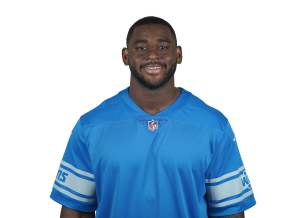
 Kentucky· 6'3"· 268 lb· 4.77s 40
"A malignant melanoma diagnosis in 2018 cost him a season and nearly his foot; four years later he left Kentucky as the most physically dominant run defender in the SEC."Pre-draft read
Heavy-handed power defender who can line up anywhere from a 3-technique to a wide edge. He plays with leverage and a strong base, locks out blockers with long arms and sheds late rather than getting washed, which is why Kentucky trusted him against double teams on early downs. The tape is full of tackles for loss created by pure displacement.
As a rusher he is a bull rusher first, converting speed to power and collapsing the pocket rather than running the arc; the bend and the counter package are limited. His value is in versatility and volume, playing 50-plus snaps on all three downs from multiple alignments. The separator is a level of physicality on contact that few interior players in the class matched.
Multiple front that rotates a strong-side base end who slides inside to 3-technique in sub packages
Year 1 early-down base end on 30-35 snaps who kicks inside on passing downs; ceiling is a three-down starting strong-side end
A wide-9 speed-rush front that asks its ends to win one-on-one off the edge and treats run defense as a secondary concern
Best used by a staff that values run-down control and rotation depth over sack totals from the position.
Josh Paschal 2021 Kentucky Highlights
All-SEC senior season: run defense, hand usage and tackles for loss.
Josh Paschal Highlights vs #10 Florida (10/2/2021)
Full-game reps against a ranked SEC front.
Joshua Paschal Ultimate Highlights
Career cut-up across alignments from 3-technique to stand-up edge.
Paschal is a five-year Kentucky defender who spent his career moving up and down the line, finishing as a first-team All-SEC pick with 53 tackles, 15.5 tackles for loss and 5.5 sacks in 12 games as a senior. He is a power player, not a bender, and the evaluation follows that.
His story is inseparable from his football. He was diagnosed with malignant melanoma on his foot before the 2018 season, had three surgeries and immunotherapy, and returned to play in three games that same fall. What he does on the field is win with hands, leverage and effort: he sets an edge, holds the point against down blocks and finishes plays across the formation. The limitations are honest — he is not an explosive first-step rusher, the pass-rush plan is power and more power, and at 6-foot-2 with 268 pounds he is between positions for some fronts.
Boards had him in the second- to third-round range as a scheme-versatile base end. Detroit, building a defensive line under Dan Campbell around exactly that kind of player, took him at 46 with the second of its three picks in the round.
- 01
Point-of-attack strength
anchors against down blocks and double teams, which is why he stayed on the field on every early down at Kentucky.
- 02
Hand usage
locks out with long arms, controls the blocker's chest and sheds late, turning stalemates into tackles for loss.
- 03
Alignment versatility
played 3-technique, 5-technique and stand-up edge at Kentucky and produced from all of them without a drop-off.
- 04
Power conversion
converts speed to power on contact and walks tackles into the pocket, a rush that still works on third down.
- 05
Character and toughness
beat melanoma, returned within the same season and became a team captain, with the practice habits to match.
- 01
First-step burst
average get-off means he rarely wins clean at the snap and needs the rush to develop before he generates pressure.
- 02
Bend and counters
a bull rusher with one plan; he does not flatten around the corner or reliably win with an inside move.
- 03
Tweener frame
at 6-foot-2 and 268 pounds he lacks the length of a true end and the mass of a full-time interior player.
- 04
Sack production
13.5 career sacks over five seasons is modest for a top-50 defensive lineman and caps his passing-down value.
— — — positional median (p50)
- 40 yd
- 4.77sp50
- Vertical
- 37.5inp50
- Broad jump
- 123inp50
- Three-cone
- —s
- Shuttle
- —s
- Bench
- —rep
| Yr | Team | G | Tkl | Sk | Int | PD | FF |
|---|---|---|---|---|---|---|---|
| 2017 | Kentucky | 13 | 17 | 3.5 | 0 | 0 | 0 |
| 2018 | Kentucky | 3 | 3 | 0 | 0 | 0 | 0 |
| 2019 | Kentucky | 13 | 34 | 3.5 | 0 | 1 | 2 |
| 2020 | Kentucky | 11 | 32 | 1 | 0 | 0 | 0 |
| 2021 | Kentucky | 12 | 53 | 5.5 | 0 | 0 | 1 |
| Career | — | 52 | 139 | 13.5 | 0 | 1 | 3 |
2020 and 2021 verified directly on cfbstats (2020: 32 tackles, 6.5 TFL, 1 sack; 2021: 53 tackles, 15.5 TFL, 5.5 sacks, 1 forced fumble). His 2017-2019 cfbstats pages are not published, so those lines come from his season ledger. The ledger rounds his last two years slightly differently (7.0 and 16.0 TFL), which is why the career TFL total here (38.0) is half a point below the 39.0 some trackers list. Categories with no published figure are left blank rather than zeroed.
A dash means the figure is not published by a source we trust — never a zero we invented.
Rotational power end who holds up against the run without ever becoming a pass-rush threat.
Sturdy strong-side end who starts for a decade on power, effort and run-defense reliability.
Between-positions lineman who never finds a defined role and drifts out of a rotation.
Everything above is the pre-draft evaluation. This section is what actually happened — updated year over year.
Josh Paschal has been a rotational defensive end for the Detroit Lions, contributing as a run defender and occasional pass rusher. He has shown flashes of potential but has not yet secured a full-time starting role.
Detroit used him exactly as advertised: a rotational base end who plays the run on early downs and pushes the pocket inside on passing downs. He missed time as a rookie after sports hernia surgery and finished 2022 with 16 tackles and two sacks in 10 games, then played 12 games in 2023 and a career-high 14 in 2024 with 21 tackles and two sacks. He was never a full-time starter and never reached four sacks in a season. A knee injury cost him the entire 2025 season, and Detroit waived him in March 2026 after four years.
The evaluation was accurate and the price was not. Everything the tape promised — the strength, the versatility, the effort against the run — showed up in Detroit, and none of it added up to more than a rotational role, because a defensive lineman without a first step or a counter has a hard ceiling in the NFL no matter how strong he is. Taking that profile at 46 in a round with better pass-rush swings available was the mistake, not the player. He gave four honest seasons of depth on a contending line.
Data note: from Minnesota