Cole
Strange.
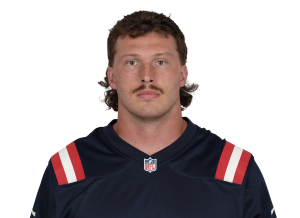
Cole
Strange.
 Chattanooga· 6'5"· 307 lb· 5.03s 40
"The most-mocked pick of the 2022 first round: a five-year Chattanooga guard whose movement skills were real and whose draft slot never was."Pre-draft read
Strange was a five-year starter at left guard for Chattanooga who played the position like an athlete rather than a mauler. His value came from movement: he pulled, climbed to linebackers, and reached playside defenders on zone concepts with the kind of foot speed most 300-pound guards do not have. In a wide-zone offense he was already at the second level when the back hit the crease.
In pass protection he set with quick, short kicks and used his hands late, mirroring quickness better than he absorbed power. Against FCS competition he was rarely beaten cleanly. The signature was leverage plus torque — he could roll his hips through contact and finish a defender to the ground, and he played with a snarl.
Wide-zone and outside-zone run game that asks guards to reach, climb and pull rather than drive-block in a phone booth.
Year 1: plug-in starting left guard in a movement scheme. Ceiling: long-term above-average zone guard, not a Pro Bowl anchor.
Gap/duo power scheme that leaves him one-on-one against a 330-pound nose tackle on early downs and asks him to win with mass.
Draft him for the scheme he fits, and no earlier than his anchor allows.
Cole Strange Moves DL in the Run Game
Run-game cut-up of the leverage, hip torque and finish that defined his Chattanooga tape.
Cole Strange Senior Bowl Highlights and Draft Ranking
Mobile one-on-ones against Power Five interior rushers, the week that moved him into round one.
Film Study: Cole Strange is a Great Scheme Fit
Post-draft breakdown of why his movement skills matched New England's zone run game.
Strange was the classic small-school riser: a five-year Chattanooga starter who arrived as a lightly recruited project and left as a 6-5, 307-pound guard with more than forty career starts and a graduate degree. He was the best player on the field most Saturdays in the Southern Conference, and evaluators spent the fall trying to work out how much of that translated.
Mobile answered it. He was among the best offensive linemen at the Senior Bowl, handling Power Five interior rushers in one-on-ones for a full week, then tested well at the combine with the movement skills the tape suggested. The concerns were level of competition, a snap count against FBS defenses that could be counted on one hand, and a 23-year-old age profile that meant less growth left. Nobody questioned the technique or the temperament.
Most boards had him as a second-round guard, some late second. New England took him at 29 — a pick so far ahead of consensus that it drew audible surprise on the broadcast — betting a scheme-perfect zone guard was worth reaching for rather than trading back and risking the run on interior linemen.
- 01
Movement skill
Pulled, climbed and reached playside defenders with foot speed that let a zone offense scheme him into space on almost any run concept.
- 02
Second-level blocking
Consistently found and fit linebackers in the open field, the hardest thing for a guard to do and the reason his tape traveled.
- 03
Hand torque
Rolled his hips through contact and finished defenders to the ground rather than just steering them out of the run lane.
- 04
Experience
More than forty career starts at left guard over five seasons, with technique and pad level already refined by the time he reached Mobile.
- 05
Senior Bowl week
Handled Power Five interior rushers in Mobile one-on-ones for a full week, the single best answer to his competition questions.
- 01
Level of competition
Southern Conference reps against FCS defenders, with almost no snaps of FBS tape to check the projection against.
- 02
Anchor versus power
Set with quickness rather than mass, so long-armed 320-pound nose tackles could walk him back into the pocket.
- 03
Age
He was a 23-year-old fifth-year senior, closer to his ceiling than a younger interior lineman with the same grade would be.
- 04
Length
Adequate rather than plus arm length for the position, which forced him to win with timing and placement instead of reach.
— — — positional median (p50)
- 40 yd
- 5.03sp50
- Vertical
- 28inp50
- Broad jump
- 120inp50
- Three-cone
- 7.44sp50
- Shuttle
- 4.50sp50
- Bench
- 31repp50
| Yr | Team | G |
|---|---|---|
| 2017 | Chattanooga | — |
| 2018 | Chattanooga | — |
| 2019 | Chattanooga | — |
| 2021 | Chattanooga | — |
| Career | — | — |
Chattanooga is an FCS program and cfbstats carries no player pages for it, so no game or start counts could be verified line-by-line and every cell stays null rather than zero. Published reporting credits him with more than forty career starts at left guard across five years in the program, including a 2020 season the Southern Conference moved to spring; offensive linemen record no statistical production regardless.
A dash means the figure is not published by a source we trust — never a zero we invented.
Functional scheme-fit starting guard whose value depends entirely on the run system around him.
Athletic zone guard who turned movement skills into a decade of Pro Bowl play.
Small-school interior lineman who needed time and health before the projection paid off.
Everything above is the pre-draft evaluation. This section is what actually happened — updated year over year.
Cole Strange has been a starting left guard for the New England Patriots, though he has dealt with injuries. He has been a consistent starter when healthy.
He started immediately. Strange played all 17 games at left guard as a rookie in 2022, a solid if unspectacular year, then tore his patellar tendon in 2023, an injury that cost him the rest of that season and most of 2024. New England waived him in the 2025 offseason, three years into a five-year first-round deal. The Chargers picked him up, and he answered with the healthiest season of his career: 14 games, 14 starts and just over 800 snaps as their starting guard, grading out as a mid-tier NFL starter.
The verdict is that the player was fine and the pick was not. Strange became exactly what the tape projected — a functional zone-scheme starting guard — but that is second- or third-round value, and New England paid pick 29 plus the opportunity cost of every player still on the board. The knee injury took two prime years out of the middle. As a talent evaluation it was reasonable; as a draft-capital decision it remains the most-cited reach of the 2022 first round.
Data note: from San Francisco via Miami and Kansas City