Bryan
Cook.
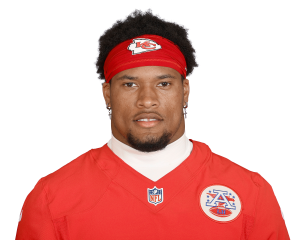
Bryan
Cook.
 Cincinnati· 6'1"· 206 lb
"A hometown transfer who needed only one full season as a starter to prove he belonged, a big, downhill safety whose versatility mattered far more than his thin résumé of snaps."Pre-draft read
A big, downhill safety who plays his best football with the game in front of him. Cook lives around the box and in the middle of the field, reads the quarterback rather than the receiver, and triggers hard once the ball leaves. He has the size to matchup with tight ends and the physicality to fit the run without waiting for help.
The second layer is range on the back end. He can carry a deep half and covers ground when he starts flat-footed at depth, though he is a see-it-then-go defender rather than an anticipator. He is a willing, thumping tackler in the alley and a special-teams contributor by temperament. The signature is versatility: box, deep, or over a tight end, without a snap where he looks out of place.
Two-high structure that rotates him between deep coverage and the box, with man responsibility on tight ends in sub packages rather than on slot receivers.
Year 1: sub-package safety and core special-teams contributor. Ceiling: a full-time starter who plays every safety alignment in a rotating two-high defense.
A single-high system that leaves him as the last defender over the top every snap, where reactive reads and modest ball production become weekly explosive plays.
The more roles a defense asks him to fill, the better he looks.
Bryan Cook — career highlights
The full reel: downhill triggers, tight-end matchups and the deep-half range that made him a second-round safety.
Bryan Cook interception vs Alabama — 2021 playoff semifinal
The single most-watched rep of his college career, against the best offense he faced.
Bryan Cook — welcome to the Chiefs highlights
Draft-day reel Kansas City published, framing the versatility they drafted him to provide.
A late bloomer whose path explains the evaluation. He began at Howard, transferred to his hometown Cincinnati program in 2019, sat behind a loaded secondary, and only became a full-time starter as a senior on the 2021 team that reached the College Football Playoff. One season of high-volume, high-leverage tape against an elite schedule is what teams graded.
That season was substantial: ninety-three tackles in fourteen games, five tackles for loss, a sack, nine passes broken up and two interceptions, including one in the playoff semifinal against Alabama. He played every role the defense asked for — deep safety, box defender, tight-end matchup — on a unit that produced multiple NFL starters, and he was voted second-team All-AAC. The knock was experience rather than talent: twenty-five games of major-conference football and a body of work concentrated in one year.
Boards graded him as a second-to-third-round safety with size, instincts and special-teams value, ready to contribute immediately and with a real chance to start. Kansas City took him at 62 with a secondary in transition and an obvious need for a physical presence in the middle of the field.
- 01
Positional versatility
Played deep, in the box and over the slot in the same game plan, which lets a defense disguise its coverage without substituting personnel.
- 02
Downhill trigger
Reads the quarterback and drives on throws in front of him with real urgency, arriving to hit rather than to wrap and drag the receiver down.
- 03
Tight-end matchup size
Has the height and mass to run with and body up big pass catchers in man coverage, the assignment safeties get exposed on most often.
- 04
Run fit toughness
Fills the alley without hesitation and takes on blockers, so a defense can play him near the line without losing anything against the run.
- 05
Playoff-tested production
Ninety-three tackles and two interceptions as a senior, one of them against Alabama in the College Football Playoff semifinal.
- 01
Limited starting sample
One full season as a starter after transferring, so his instincts were graded on a body of work most evaluators considered too thin.
- 02
Reactive coverage
Sees the throw and then goes rather than anticipating it, which costs him a step against quarterbacks who manipulate the middle of the field.
- 03
Man coverage in space
Loses ground on quicker slot receivers who can break him down, so his best coverage work stays vertical or over bigger targets.
- 04
Ball production
Only two career interceptions and eleven passes defended, a modest takeaway profile for a safety whose value depends on middle-of-field reads.
| Yr | Team | G | Tkl | Sk | Int | PD | FF |
|---|---|---|---|---|---|---|---|
| 2019 | Cincinnati | 1 | 2 | 0 | 0 | 0 | 0 |
| 2020 | Cincinnati | 10 | 26 | 0 | 0 | 2 | 0 |
| 2021 | Cincinnati | 14 | 93 | 1 | 2 | 9 | 0 |
| Career | — | 25 | 121 | 1 | 2 | 11 | 0 |
Cincinnati seasons verified against cfbstats (team 140, player 1091124). His 2017 and 2018 seasons at Howard are FCS and not covered there, and the published lines for those years are incomplete, so they are excluded rather than estimated; the career line here covers his three Cincinnati seasons only. One discrepancy: cfbstats lists 5.0 tackles for loss in 2021 while the aggregate career table lists 6.0.
A dash means the figure is not published by a source we trust — never a zero we invented.
The realistic outcome, and the one that happened: a versatile, physical starting safety who is paid well without ever being a household name.
The ceiling is a middle-of-the-field starter whose range and reliability turn into a top-of-market second contract.
The floor is a rotational safety whose limited starting sample never expands and who bounces between teams on modest deals.
Everything above is the pre-draft evaluation. This section is what actually happened — updated year over year.
Bryan Cook has played two seasons for the Kansas City Chiefs, developing into a starting safety. He contributed to a Super Bowl victory in his rookie season.
Kansas City used him immediately: sixteen games as a rookie, a rotational safety role on a Super Bowl-winning defense, then a step up in year two before an ankle injury cost him five games in the middle of a second championship season. From 2024 on he was a genuine every-down starter — seventy-eight tackles across seventeen games, then eighty-five with six passes defended in 2025, playing more snaps than any season of his career and posting the best coverage tape he has produced. He finished his rookie contract with sixty-two games, forty-seven starts, two Super Bowl rings and a reputation as one of the more reliable middle-of-the-field defenders in the league.
Free agency settled the argument. He went home in March 2026 on a three-year deal worth roughly forty million dollars, which is what the market pays a starting safety, not a rotational one. The pre-draft concern — one year of starting tape — turned out to be a discount rather than a warning: he was already NFL-ready and simply needed reps. This is the version of a late second-round pick that works exactly as designed, and the team that drafted him got four years of it at rookie prices before somebody else paid.
Data note: Imported from Wikipedia 2022 NFL draft player selections table.