Brian
Asamoah.
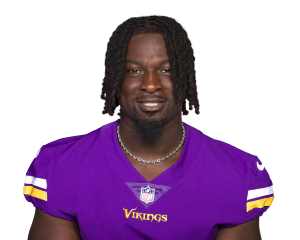
Brian
Asamoah.
 Oklahoma· 6'0"· 226 lb· 4.56s 40
"The fastest player in Oklahoma's front seven and a genuine coverage linebacker in a nickel league — the entire projection rests on whether a defensive line can keep guards off a 226-pound frame."Pre-draft read
Downhill weakside linebacker who plays with his eyes and his feet rather than his hands. He fires out of his stance the instant he reads run, works over the top of trash and closes on a ball carrier in the alley with the burst of a safety. Tackling is efficient rather than violent — good angle, late break-down, secure wrap.
In coverage he is comfortable carrying tight ends up the seam and running with backs on wheel routes, and he passes off crossers cleanly in zone. Range is the separator — he can start at the second level over the guard and still be the first defender to the sideline. The athletic ceiling is real, but the game is built on speed and anticipation, not on stacking and shedding blockers at the point of attack.
Light-box nickel defense that keeps him clean behind an attacking four-man front and asks him to run rather than take on guards.
Year 1: core special-teamer and dime coverage linebacker. Ceiling: three-down WILL who erases the perimeter run game.
Two-gap 3-4 front that leaves him uncovered against pulling guards and asks him to spill power on early downs.
Everything about the projection depends on the defensive line keeping guards off his frame.
Brian Asamoah 2021 Highlights | Oklahoma LB
Junior-season reel: downhill trigger, alley range and coverage reps from his 86-tackle year.
Oklahoma LB Brian Asamoah Highlights | 2022 NFL Draft
Pre-draft profile cut focused on how he wins in space and where blockers find him.
Brian Asamoah interception, Oklahoma vs Florida
The Cotton Bowl interception against Florida, the signature coverage rep of his sophomore breakout.
A three-year Oklahoma linebacker who arrived as a lightly recruited Ohio prospect and left as the fastest player in his own front seven. He is the modern nickel-era weakside backer: undersized by traditional standards, built to run sideline to sideline, and best when the defense keeps him clean and lets him play in space instead of asking him to take on guards.
The production curve tells the story. He was a rotational contributor as a freshman, broke through as a sophomore with an interception and a forced fumble on the way to a Cotton Bowl showing against Florida, and then led the linebacker room in tackles as a junior with an 86-stop season across twelve games. The flags were never about effort or football character; they were about mass. He plays at roughly 226 pounds, and when a guard or a fullback found him on a down block the rep was over. Blocks-off-blocks and inconsistent stack-and-shed control were the two boxes that stayed unchecked all season.
Draft rooms had him firmly on Day 2 — a late-second to mid-third value depending on how much a defense believed in coverage linebackers. Minnesota took him at 66 to add speed behind an established starting duo, betting that special teams would buy him time while he learned to survive contact between the tackles.
- 01
Sideline range
starts over the guard and still beats ball carriers to the boundary, the kind of second-level speed that lets a defense play lighter personnel without giving up the perimeter.
- 02
Instant trigger
reads run and fires downhill without a false step, meeting backs at the line of scrimmage on inside zone before the second-level block can find him.
- 03
Coverage equity
carries tight ends up the seam and runs with backs on wheel routes, which keeps him on the field in nickel instead of coming off for a safety.
- 04
Angles in the alley
takes efficient pursuit paths on outside zone and toss, breaking down late so the back cannot make him miss in open grass.
- 05
Special-teams profile
the speed and willingness translate immediately to coverage units, giving a defense a way to keep him active while he develops.
- 01
Play strength at the point
at roughly 226 pounds he gets displaced when a guard or fullback gets a clean angle, and the rep ends before he can work back to the ball.
- 02
Block deconstruction
hand usage to stack and shed is a work in progress; he prefers to run around blocks rather than strike, extend and disengage on his own terms.
- 03
Zone eye discipline
can get carried by play-action and crossing traffic, drifting off his landmark and opening the throwing window behind him.
- 04
Slim margin for error
the profile only works if the front keeps him clean, so a scheme that asks him to two-gap or spill the puller regularly exposes the frame.
— — — positional median (p50)
- 40 yd
- 4.56sp50
- Vertical
- 36.5inp50
- Broad jump
- 124inp50
- Three-cone
- —s
- Shuttle
- —s
- Bench
- —rep
| Yr | Team | G | Tkl | Sk | Int | PD | FF |
|---|---|---|---|---|---|---|---|
| 2019 | Oklahoma | 14 | 23 | 2 | 0 | 1 | 0 |
| 2020 | Oklahoma | 11 | 66 | 2 | 1 | 4 | 1 |
| 2021 | Oklahoma | 12 | 86 | 1 | 0 | 0 | 2 |
| Career | — | 37 | 175 | 5 | 1 | 5 | 3 |
2020-21 from cfbstats (Oklahoma team 522, player 1096404); 2019 from Tankathon, as cfbstats has no 2019 archive for him. Tankathon lists 90 tackles and 6.0 TFL in 2021 and 179 career tackles; cfbstats totals are used for 2020-21 and the career line sums the seasons shown. He redshirted in 2018, so no season row is listed.
A dash means the figure is not published by a source we trust — never a zero we invented.
A rotational off-ball linebacker whose real value shows up on coverage units and in dime looks.
The ceiling case is a rangy every-down WILL whose coverage keeps him on the field in every sub package.
The floor is a speed linebacker who never solves blocks and settles into a special-teams-only career.
Everything above is the pre-draft evaluation. This section is what actually happened — updated year over year.
Brian Asamoah has played two seasons for the Minnesota Vikings, primarily contributing on special teams and as a rotational linebacker. He has yet to secure a full-time starting role.
Minnesota drafted him into a room with two entrenched starters and used him almost exclusively on special teams. He played sixteen games as a rookie and finished with seventeen combined tackles and a forced fumble, then saw his snaps shrink in year two — thirteen games, seven tackles — as the defensive staff kept the same starting pair on the field. Year three brought seventeen appearances and six tackles, still without a defensive foothold, and the Vikings waived him in August 2025 before his fourth season. He caught on in Cincinnati and played four games there, finishing his rookie contract with fifty games, thirty combined tackles and no starts.
The evaluation was not wrong about what he was; it was wrong about what that was worth at 66. The speed and the coverage comfort were real and they got him drafted, but a linebacker who needs to be kept clean has to earn snaps against players who can also take on blocks, and he never did. The weight flag that everyone wrote down was the flag that decided the career. In a league that increasingly plays a safety at that spot, the archetype has to be exceptional to hold a job, and his production never separated him from the special-teams tier.
Data note: from Detroit