
Boye
Mafe.
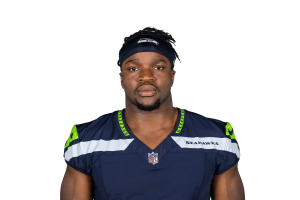
Boye
Mafe.
 Minnesota· 6'4"· 261 lb· 4.53s 40
"A late-blooming Minnesota edge whose Senior Bowl week turned a rotational Big Ten rusher into a second-round athlete bet: elite get-off, elite closing speed, an unfinished plan."Pre-draft read
Wide-alignment edge rusher who plays off explosion. His first step is the calling card: he fires flat out of a three-point stance, threatens the tackle's outside shoulder immediately and converts speed to power with a long-arm when the set overcompensates. Minnesota used him almost exclusively as a rusher on passing downs, and he closed on the quarterback faster than the pocket could reset.
Against the run he is a chaser more than a setter, quick to shoot a gap but light in the hands when a tight end drives him. The athletic ceiling is top of the class — he moves like a linebacker at 261 pounds and covers ground on stunts and loops. The separator is the finish: once he turns the corner, ball carriers do not escape.
Wide-9 or attacking four-man front that rushes its edges upfield on early downs
Year 1 designated pass rusher in a rotation; ceiling is a starting speed rusher who produces eight to ten sacks a season with a run-stout partner
A two-gap front that asks its ends to read and control blocks, or a defense that needs its edge to set a hard boundary against 12 personnel
Needs a line coach who builds a counter off the speed rush, because the athletic edge alone plateaus by year three.
Boye Mafe Minnesota Highlights
Minnesota career reel: get-off, long-arm conversions and closing speed.
Highlights: Minnesota's Boye Mafe | Big Ten Football in the 2022 NFL Draft
Conference cut-up of his senior season rush wins.
Boye Mafe (Minnesota) 2022 NFL Draft Film Study
Rep-by-rep look at the speed rush and the missing counter.
Mafe is a traits-first edge rusher who spent four years growing into his body at Minnesota and only became a full-time problem as a senior. The identity is explosion: get-off, bend and closing burst, applied from a wide alignment where he has room to run.
The production followed a slow curve. He was a special-teams and rotation player in 2018 and 2019, then broke through with 4.5 sacks in the six-game 2020 season and posted 10 tackles for loss and seven sacks as a senior in 2021. He was All-Big Ten and then dominated Senior Bowl week, winning National Team Player of the Game and moving himself up boards more than any edge in the class. The flags were the rush plan and the run fits: he leaned on speed without a reliable counter, and Minnesota rarely asked him to hold an edge against a tight end.
Rooms had him in the second round, with a range from late first for teams betting on the testing to early third for those wanting more refinement. Seattle, in the first draft after trading Russell Wilson and rebuilding a front with almost no pass rush, took the athlete at 40 and accepted that the technique would need two years.
- 01
First-step explosion
one of the fastest get-offs in the class, and it forces tackles into a hurried, upright pass set before the third step.
- 02
Closing speed
covers the last five yards to the quarterback faster than most edges in the class, which turns near-misses into finished sacks.
- 03
Speed-to-power conversion
plants and drives a long-arm through the tackle's chest when the set overcommits to the outside track.
- 04
Senior Bowl week
the best rusher in Mobile against high-level tackles, which validated the traits outside a rotational college role.
- 05
Effort in pursuit
chases plays across the formation and finishes at the sideline, an easy trait for a defensive line coach to build on.
- 01
Rush plan
wins on the same speed track too often and lacks a reliable counter when the tackle beats him to the spot on the first move.
- 02
Run defense
light hands at the point of attack, and tight ends can turn his shoulders and wall him out of the play side.
- 03
Late production
the entire résumé is 11.5 sacks across two seasons, with almost nothing before his fourth year on campus.
- 04
Hand usage
swipes without setting up the blocker's punch, and long-armed tackles can latch onto his frame and stall the rep.
— — — positional median (p50)
- 40 yd
- 4.53sp50
- Vertical
- 38inp50
- Broad jump
- 125inp50
- Three-cone
- —s
- Shuttle
- —s
- Bench
- —rep
| Yr | Team | G | Tkl | Sk | Int | PD | FF |
|---|---|---|---|---|---|---|---|
| 2018 | Minnesota | — | 12 | 0.5 | 0 | 1 | 0 |
| 2019 | Minnesota | — | 14 | 3 | 0 | 0 | 0 |
| 2020 | Minnesota | 6 | 27 | 4.5 | 0 | 2 | 2 |
| 2021 | Minnesota | 13 | 34 | 7 | 0 | 0 | 1 |
| Career | — | 19 | 87 | 15 | 0 | 3 | 0 |
2020 and 2021 verified on cfbstats (2021: 26 solo + 8 assisted = 34 tackles, 10.0 TFL, 7.0 sacks, 1 forced fumble). 2018 and 2019 are not published on cfbstats and come from a season ledger whose regular-season and postseason splits sum to the career line (12+14+27+34 = 87 tackles, 19.5 TFL, 15.0 sacks). Game counts for 2018-19 and unverified splits are left blank rather than filled with zeros.
A dash means the figure is not published by a source we trust — never a zero we invented.
Rotational-to-starter rusher who lands in the six-to-nine sack range on a good defense.
Speed-first edge whose get-off makes him a premium pass-rush specialist without a run role.
Elite testing edge whose lack of a counter and run anchor turned into a short peak.
Everything above is the pre-draft evaluation. This section is what actually happened — updated year over year.
Boye Mafe has played two seasons for the Seattle Seahawks as a defensive end/edge rusher. He became a full-time starter in his second season and showed significant pass-rushing potential.
Seattle brought him along slowly. He rotated as a rookie and finished with three sacks in 17 games, then broke out in 2023 with nine sacks in 16 games as the Seahawks turned him loose on passing downs. The follow-up was steady rather than a leap: six sacks in 15 games in 2024, then a quieter 2025 with two sacks and 31 tackles across 17 games as Seattle rotated a deeper front. He left in free agency and signed with Cincinnati, four seasons and roughly 20 sacks into a career built on the same trait scouts drafted.
The evaluation is close to right, with one clean lesson. The explosion translated immediately and the run defense never became a strength, which is why he has spent four years as a high-value sub-package rusher instead of a three-down edge. Taking him at 40 was fair value for that outcome — a nine-sack season plus three other productive years is real return on a second-round pick — but the ceiling talk that followed the Senior Bowl was always a projection of technique that only partly arrived. He is proof that get-off gets you paid and hand skill decides how much.
Data note: from Denver