
Van
Jefferson.
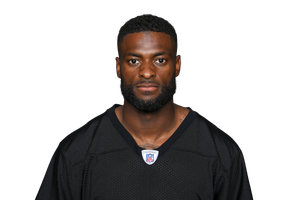
Van
Jefferson.
 Florida· 6'1"· 200 lb
"The most polished route runner in the class was also one of the oldest players in it, a coach's son who turned 24 in his rookie season with 2,159 college receiving yards and no season above 700."Pre-draft read
Refined outside receiver who wins with footwork and timing rather than speed or size. The route running is the trait: he stems defenders off their leverage, sinks his hips at the break point and comes out of cuts clean, which makes him immediately trustworthy on the intermediate route tree.
The secondary skill is his hands and body control on contested throws down the sideline, where he tracks the deep ball well and adjusts late. He offers almost nothing after the catch and does not threaten a defense vertically on pure speed. The signature is the comeback or dig against off coverage, where a defensive back who respects the stem is already three yards out of the play before the ball leaves the quarterback's hand.
Timing-based play-action offense that rewards precise stems and defined route depth
Year 1 as a third receiver who wins on intermediate routes and back-shoulder throws; ceiling is a reliable number two with an 800-yard season in a good offense.
A vertical offense that asks its outside receivers to win on straight-line speed and create after the catch, which has nothing for him to do.
His value rises sharply with a quarterback who throws on timing and trusts the break before the receiver is open.
Van Jefferson 2019 Florida Highlights
Senior-season reel, the clearest look at the stem work and break-point footwork.
Van Jefferson | Florida WR Highlights
Full Florida cut-up covering both seasons in Gainesville.
Mr. Reliable - Van Jefferson Gators Montage
Possession-receiver montage showing the contested sideline catches and third-down work.
The son of a longtime NFL receiver and receivers coach, he spent two seasons at Ole Miss before transferring to Florida when the program went on probation, and he arrived in Gainesville with a professional's understanding of the position. At 6-1 and 200 pounds he is average-sized and average-built, with a foot injury that kept him out of Combine testing entirely.
The production never matched the technique. His best season was 49 catches for 657 yards and six touchdowns as a senior, and his four-year total across two SEC schools is 175 receptions for 2,159 yards and 16 touchdowns — solid, never dominant. The tape explains why: he is a possession receiver in a class full of separators, with real limitations after the catch and no vertical gear to punish a safety who plays over the top.
The age was the other flag. He turned 24 during his rookie season, which for evaluators means the polish on the tape was already the finished product rather than a promise. Los Angeles, running an offense built on timing and route detail rather than raw athleticism, took him at 57 as a plug-and-play third receiver.
- 01
Elite route technique
Stems and breaks are pro-ready on arrival, the most refined footwork of any receiver in the class by a clear margin.
- 02
Coaching bloodline
Son of an NFL receiver and receivers coach, with the preparation habits and route vocabulary that come with it.
- 03
Sideline ball tracking
Locates and adjusts to the deep ball well, winning contested throws along the boundary despite average size.
- 04
Scheme intelligence
Understands coverage leverage and finds the soft spot against zone, which makes him a quarterback's reliable third option.
- 05
Two-conference production
175 catches across Ole Miss and Florida against SEC secondaries, with no drop-off after the transfer.
- 01
No vertical gear
Cannot threaten a safety with pure speed, so defenses can sit on his intermediate breaks without consequence.
- 02
Nothing after the catch
Rarely makes the first man miss, which turns most of his completions into exactly what the route was worth.
- 03
Age relative to the class
He turns 24 during his rookie year, so there is no projection left; the tape is the finished player.
- 04
Modest production ceiling
Never topped 700 yards in a season, a real limitation for a receiver whose calling card is polish rather than traits.
| Yr | Team | G | Rec | Yds | TD |
|---|---|---|---|---|---|
| 2016 | Ole Miss | 12 | 49 | 543 | 3 |
| 2017 | Ole Miss | 10 | 42 | 456 | 1 |
| 2018 | Florida | 13 | 35 | 503 | 6 |
| 2019 | Florida | 13 | 49 | 657 | 6 |
| Career | — | 48 | 175 | 2159 | 16 |
Sports-Reference totals include bowl games for the Florida seasons; season sums match the career line exactly (175 receptions for 2,159 yards and 16 touchdowns in 48 games across two schools). He also carried six times for 47 yards, five of those carries coming as a freshman at Ole Miss. He did not test at the Combine because of a foot injury.
A dash means the figure is not published by a source we trust — never a zero we invented.
A technically sound complementary receiver who has one big season and stays useful on several teams for a decade.
The outcome where route technique and reliable hands turn into a 90-catch volume receiver in the right offense.
A polished but athletically limited outside receiver who settles in as a fourth option and never holds a starting job.
Everything above is the pre-draft evaluation. This section is what actually happened — updated year over year.
He caught 19 passes as a rookie behind a crowded Rams depth chart, then broke through in 2021 with 50 receptions for 802 yards and six touchdowns as the number two option in a Super Bowl LVI-winning offense. A knee injury cost him most of the 2022 preseason and he managed 24 catches in 11 games, and by midseason 2023 the Rams had traded him to Atlanta, where he caught 12 passes in 12 games. He signed with Pittsburgh for 2024 and played all 17 games with 12 starts for 276 yards, then spent 2025 in Tennessee with 29 catches for 350 yards in 16 games. Washington signed him in March 2026. His career line reads 94 games, 166 receptions, 2,226 yards and 13 touchdowns, plus 17 playoff catches and a championship ring.
The evaluation was correct in both directions and the outcome landed exactly in the middle. The route running was real and it kept him employed for seven seasons on five teams; the absence of speed, yards after catch and a true number-one gear meant he never became more than a complementary piece. The 2021 season was the version teams drafted him hoping for, and it lasted one year. For pick 57 in a historically deep receiver class, that is a modest return — several receivers taken behind him became better players.
Data note: from Houston