Troy
Pride Jr..
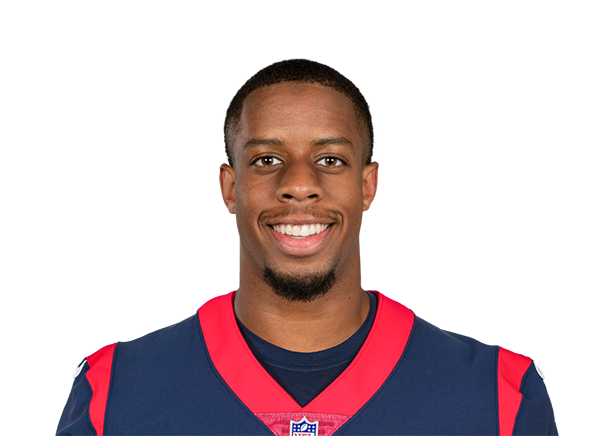
Troy
Pride Jr..
 Notre Dame· 5'11"· 193 lb· 4.40s 40
"A Notre Dame track sprinter who could run with anyone vertically and never learned to find the football, drafted for the recovery speed rather than the coverage tape."Pre-draft read
Pride is a long-speed outside corner who ran sprints for the Notre Dame track team, and the track background shows on every vertical rep. He can turn and run with any receiver in the country, recover when he is beaten off the line and carry a go route down the sideline without safety help.
He plays best in press-man, getting hands on a receiver at the line and using his speed to stay on the hip, and he competes on jump balls he has no business winning. The trouble is the intermediate game: his eyes drift in zone, he opens his hips early and gives up the underneath route, and he plays through hands more than he locates the ball. The signature is straight-line speed.
A press-man defense that asks its outside corners to jam, turn and run, with safety help away from the boundary and minimal zone responsibility.
Year 1 fourth corner and core special-teamer, with a ceiling as a man-coverage boundary starter who erases deep routes on a single-high defense.
A zone-match system that requires pattern reading, eye discipline and physical run support from its corners.
Troy Pride Jr. (Notre Dame CB #5) vs. Vanderbilt (2018)
All-snaps study from the junior year game in which he recorded one of his two interceptions.
Troy Pride Jr. CB #5 | Notre Dame
Career cutup showing the recovery speed and press technique that carried his evaluation.
Troy Pride: NFL Combine
Combine coverage from the school, where the track-sprinter speed was the headline.
Pride arrived from Greer, South Carolina, and played immediately, appearing in eight games with three starts as a true freshman in 2016 and making twelve tackles. He grew into the rotation as a sophomore with twelve appearances and four starts down the stretch, including the Miami, Navy, Stanford and LSU games, and produced 22 tackles with an interception and three passes defended.
His junior year was his best. He played twelve games, missing only Pitt with an ankle injury, and posted 47 tackles, a season with 1.5 tackles for loss, two interceptions in consecutive weeks against Vanderbilt and Wake Forest, ten pass break-ups, a forced fumble and a fumble recovery. As a senior he started all thirteen games for an eleven-win Irish team, made 40 tackles with an interception at Duke and six pass break-ups, and broke up a pass in the Camping World Bowl win over Iowa State. He finished with 45 career games, four interceptions and nineteen break-ups, all while competing as a sprinter on the track team.
The evaluation hinged on that speed. Scouts loved the recovery gear and the willingness to press, and worried about the frame, the tackling and the zone instincts. He graded as a developmental boundary corner. Carolina, rebuilding its secondary, took him at 113.
- 01
Track-caliber long speed
A sprinter on the Notre Dame track team who can carry vertical routes down the sideline without help.
- 02
Press-man aptitude
Comfortable getting hands on receivers at the line and riding the hip, the technique most NFL boundary jobs require.
- 03
Four-year contributor
Played in 45 games across four seasons at a program that faced elite receivers every fall.
- 04
Junior-year ball production
Posted two interceptions, ten pass break-ups, a forced fumble and a fumble recovery in twelve games in 2018.
- 05
Competitive at the catch point
Contests jump balls against bigger receivers instead of conceding and playing for the tackle.
- 01
Zone eye discipline
Drifts in coverage and loses receivers crossing his face, which limited him to man-heavy schemes.
- 02
Finishing the ball
Plays through hands rather than locating the throw, so four career interceptions undersold his coverage snaps.
- 03
Slight frame
At 194 pounds he gets stacked by physical receivers and struggles to reroute them off the line.
- 04
Tackling inconsistency
Comes in high and misses in space, a real problem for a boundary corner in run support.
— — — positional median (p50)
- 40 yd
- 4.40sp50
- Vertical
- 35.5inp50
- Broad jump
- 119inp50
- Three-cone
- 6.94sp50
- Shuttle
- 4.26sp50
- Bench
- 13repp50
| Yr | Team | G | Tkl | Sk | Int | PD | FF |
|---|---|---|---|---|---|---|---|
| 2016 | Notre Dame | 8 | 12 | 0 | 0 | 0 | 0 |
| 2017 | Notre Dame | 12 | 22 | 0 | 1 | 3 | 0 |
| 2018 | Notre Dame | 12 | 47 | 0 | 2 | 10 | 1 |
| 2019 | Notre Dame | 13 | 40 | 0 | 1 | 6 | 0 |
| Career | — | 45 | 121 | 0 | 4 | 19 | 1 |
Every season line comes from Notre Dame official bios; the four tackle figures sum exactly to 121 across 45 games, and the interception and break-up columns sum to four and nineteen. Categories the school does not publish for a given year are left empty rather than filled with zeros.
A dash means the figure is not published by a source we trust — never a zero we invented.
A speed corner who bounces between rosters, starting when injuries force it and never locking a job down.
The ceiling: an athletic outside corner who becomes a long-term rotational starter on a man-coverage defense.
A fast defensive back whose NFL time is confined to a handful of games and special-teams snaps.
Everything above is the pre-draft evaluation. This section is what actually happened — updated year over year.
The rookie year was the career. Pride played fourteen games with eight starts for Carolina in 2020, making 42 total tackles, a tackle for loss and two passes defended while getting thrown at constantly, and the results were what the pre-draft report warned about: the speed held up vertically, the technique did not hold up underneath. He did not appear in a regular-season game in 2021 or 2022.
Las Vegas gave him one game in 2023 and Dallas gave him two in 2024, where he made a single start and recorded two solo tackles and a pass defensed. The career line is 17 games, 45 total tackles, three passes defended and no interceptions. In hindsight this is a straightforward case of an athlete who never became a football player at the NFL level: the recovery speed that pushed him into the fourth round was real, but without zone instincts, ball skills or reliable tackling, there was no version of a defense that could keep him on the field once the rookie audition ended.