Saahdiq
Charles.
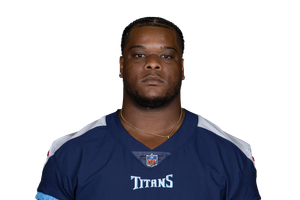
Saahdiq
Charles.
 LSU· 6'4"· 321 lb· 5.05s 40
"A national champion who started at left tackle in the SEC as a true freshman, then sat out six games as a junior, falling from a second-round grade to the fourth because teams doubted they could count on him."Pre-draft read
Charles is a powerful, compact blocker who protected Joe Burrow's blind side on the best offense college football has produced. He explodes off the line with heavy leg drive and can displace defensive linemen on down blocks and duo, playing with the grip strength and finish of a guard while lining up at left tackle.
In protection he is smooth rather than long, mirroring well inside and using quick hands to reset when a rusher converts speed to power. His reach is the issue against wide rushers, who get around his edge before he can slide and force him to overset. He also plays high. The signature is power and pedigree: two years starting on the blind side in the SEC as a teenager, on a line that won the Joe Moore Award.
A gap and duo run scheme that wants a powerful, short-area interior blocker who can displace a three-technique and work combinations to the linebacker level.
Year 1 interior backup and developmental swing lineman, with a ceiling as a long-term starting guard in a power run offense.
A team that needs him to hold up at left tackle against premier wide speed rushers, where his reach is exposed on an island.
Saahdiq Charles LT (LSU vs Texas every offensive snap)
Full all-snaps game against Texas in 2019, the cleanest look at the blind-side tape.
Saahdiq Charles OT LSU 2020 NFL Draft
Pre-draft cutup highlighting the leg drive and the reach limitations at tackle.
LSU Tackle Saahdiq Charles #77
Career reel from the national championship season protecting Joe Burrow.
Charles started in Baton Rouge before he could legally drink. Displaced from New Orleans by Hurricane Katrina as a child and raised across four states before settling in Jackson, Mississippi, he arrived at LSU as a four-star recruit and started nine games as a true freshman in 2017, earning All-SEC Freshman honors. He started ten games at left tackle as a sophomore and played every snap in wins over Georgia, Alabama and Mississippi State.
Then came the strange junior year. Charles was held out of six games in 2019 for what Ed Orgeron called a coach's decision, playing in alternating weeks and starting seven games during the regular season for a 13-0 team, before returning for the playoff run that ended with a national championship. The line he was part of won the Joe Moore Award as the nation's best. He finished with 28 starts across three seasons at three positions and declared for the draft rather than return as a senior.
Everything about the evaluation came down to the absences. Teams graded the tape as a second-round blind-side starter who might be better inside, then graded the person as unreliable, with reports that multiple clubs removed him from their boards entirely. Washington, which had just traded Trent Williams, bought the discount at 108.
- 01
Elite power at the point
Explodes off the line with leg drive and can displace SEC defensive linemen on down blocks and combinations.
- 02
Started as a true freshman
Nine starts at 18 years old in the SEC, then twenty more over the next two seasons on the blind side.
- 03
Positional flexibility
Logged starts at left tackle, right tackle and right guard, with a frame that projected cleanly to guard.
- 04
Joe Moore Award pedigree
Protected Joe Burrow on a national championship line voted the best offensive line in the country.
- 05
Smooth feet in tight spaces
Mirrors interior rushers and resets his hands quickly when a defender tries to convert speed to power.
- 01
Reliability red flags
Held out of six games as a junior for a coach's decision, which removed him from some NFL draft boards entirely.
- 02
Short reach for tackle
Lacks the arm length to keep wide speed rushers off his frame, which is why teams projected him inside.
- 03
Inconsistent pad level
Plays high in protection, letting rushers get under his hands and walk him back into the pocket.
- 04
Missed developmental time
Sat out roughly half of his final season, arriving in the NFL with far less recent tape than his talent suggested.
— — — positional median (p50)
- 40 yd
- 5.05sp50
- Vertical
- —in
- Broad jump
- —in
- Three-cone
- —s
- Shuttle
- —s
- Bench
- —rep
| Yr | Team | G |
|---|---|---|
| 2017 | LSU | 13 |
| 2018 | LSU | 10 |
| 2019 | LSU | — |
| Career | — | 23 |
Game and start counts from LSU official releases, which confirm 23 games and 19 starts across 2017 and 2018 and a 28-start career total. His 2019 appearance count is not published consistently because he was held out of six games as a coach's decision and played in alternating weeks, so it is left empty rather than estimated. Offensive linemen do not accumulate conventional statistics; he logged 1,449 offensive snaps across his first two seasons.
A dash means the figure is not published by a source we trust — never a zero we invented.
A useful interior backup who starts a handful of games a year and holds a roster spot on versatility.
The ceiling: an LSU blocker with heavy hands who grows into a decade-long starter once the technique matures.
A powerful tackle prospect who never solves the edge and bounces between teams inside.
Everything above is the pre-draft evaluation. This section is what actually happened — updated year over year.
Washington drafted him as a possible Trent Williams replacement and got a part-time guard. Charles appeared in only two games as a rookie in 2020 after opening the year on the reserve list, then played nine games with two starts in 2021 and eleven with seven starts in 2022, mostly at left guard, where he flashed enough to enter 2023 as a projected starter. Injuries and inconsistency wiped out that chance, and Washington let him leave after the season.
Since then he has been a camp body. Tennessee signed him in 2024, Dallas in 2025, then Carolina, without a regular-season appearance for any of them. Through 2025 his NFL line reads 37 games and 18 starts across six seasons. In hindsight the fourth-round price was a fair bet on talent the league had already flagged, and the availability questions that caused the fall in 2020 turned out to be the exact reason the career never took hold. The tape said second round; the attendance record said otherwise, and it was right.