Ke'Shawn
Vaughn.
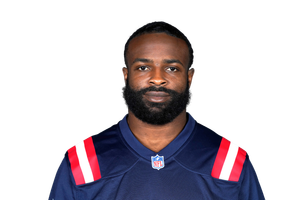
Ke'Shawn
Vaughn.
 Vanderbilt· 5'10"· 214 lb· 4.51s 40
"A two-school back who averaged 7.9 yards a carry for 1,244 yards as an SEC newcomer, then carried 198 times as a senior, arriving at 22 with two 1,000-yard seasons and no home-run gear."Pre-draft read
Vaughn is a compact, one-cut back who runs behind his pads and finishes forward. At 5-10 and 214 pounds he has real contact balance, bouncing off arm tackles and falling ahead of the pile. He reads a gap, plants and goes; the best version of him is a downhill zone runner who does not dance.
Long speed is adequate rather than dangerous, so his explosive plays come from beating pursuit angles rather than pulling away from a safety. He catches the ball well enough out of the backfield to work on third down, and the signature is the combination: patient enough to let a block set up, violent enough to run through a late arm.
Outside zone running game that rewards a decisive one-cut back and does not ask him to create yardage on his own behind a losing line.
Year 1 rotational back splitting early-down work, with a ceiling as a high-volume 1A in a committee rather than a featured starter.
A spread offense that needs its back to break long runs and win one-on-one in the open field, which asks for the exact gear he does not have.
He has to earn snaps on reliability and pass protection; without a separating trait, any roster with two established backs will keep him inactive.
Ke'Shawn Vaughn 2019 Vanderbilt Highlights
Senior-season cutup from the 198-carry year that made him a third-round pick.
Ke'Shawn Vaughn (Vanderbilt RB) vs LSU (2019)
Single-game study against the national champion, including his 130-yard, two-touchdown afternoon.
Ke'Shawn Vaughn, Vanderbilt and Illinois Highlights
Full draft-cycle reel covering both schools and the contact balance that defined his profile.
Vaughn was a productive back at two schools with a year off in between. He rushed for 723 yards on 157 carries as a true freshman at Illinois in 2015 and added 301 yards in 2016, then transferred to Vanderbilt and sat out 2017 under transfer rules. What he did in Nashville is why he was drafted.
In 2018 he ran for 1,244 yards and 12 touchdowns on 157 carries, an average of 7.9 yards per attempt and the second-highest single-season rushing total in Vanderbilt history, adding 13 catches for 170 yards and two scores. The Associated Press named him SEC Newcomer of the Year and second-team All-SEC. As a senior in 2019 he carried the load, with 198 attempts for 1,028 yards and nine touchdowns and a much larger receiving role, making him the third Vanderbilt back with multiple 1,000-yard seasons. He played in the Senior Bowl and at the combine.
The evaluation was about ceiling rather than floor. He was already 22 with five college seasons on the odometer, his efficiency fell from 7.9 to 5.2 yards per carry as the volume rose, and nobody projected him as a home-run threat at the next level. Tampa Bay, a Super Bowl contender with an unsettled backfield, took him at 76 hoping for an immediate rotational contributor.
- 01
Contact balance
Runs low with a compact build, bounces off arm tackles and consistently finishes forward instead of going down at first contact.
- 02
Vision and decisiveness
Reads a gap, plants and gets downhill without wasted steps, the trait behind a 7.9-yard average in his first Vanderbilt season.
- 03
Production at two schools
Rushed for 3,296 yards and 30 touchdowns across Illinois and Vanderbilt, with two 1,000-yard seasons in the SEC.
- 04
Receiving ability
Caught 67 passes for 664 yards in college with soft hands and enough route work to stay on the field on third down.
- 05
Zone-scheme fit
One-cut runner who works best on stretch and outside zone, the most common run concept in the league he was entering.
- 01
Long speed
Does not pull away from NFL defensive backs, so his explosive runs depend on beating pursuit angles rather than winning a footrace.
- 02
Age and mileage
Turned 23 in his rookie year with five college seasons behind him, leaving little projection beyond what he already was.
- 03
Efficiency decline
Yards per carry dropped from 7.9 to 5.2 as his workload grew, raising questions about how he holds up as a volume back.
- 04
Pass protection
Needs work identifying and absorbing blitzers, the specific skill that decides whether a rookie back plays on passing downs.
Relative Athletic Score (Kent Lee Platte) benchmarks combine/pro-day numbers against every measured prospect at the position since 1987. 10.00 is elite; 5.00 is average.
— — — positional median (p50)
- 40 yd
- 4.51sp50
- Vertical
- 32inp50
- Broad jump
- 117inp50
- Three-cone
- —s
- Shuttle
- —s
- Bench
- —rep
| Yr | Team | G | Att | Yds | TD | Rec | RecYds |
|---|---|---|---|---|---|---|---|
| 2015 | Illinois | 11 | 157 | 723 | 6 | 16 | 119 |
| 2016 | Illinois | 11 | 60 | 301 | 3 | 9 | 89 |
| 2018 | Vanderbilt | 12 | 157 | 1244 | 12 | 13 | 170 |
| 2019 | Vanderbilt | 12 | 198 | 1028 | 9 | 29 | 286 |
| Career | — | 46 | 572 | 3296 | 30 | 67 | 664 |
He redshirted in 2017 after transferring from Illinois to Vanderbilt, so that year carries no line. Season totals sum exactly to the career figures of 572 carries for 3,296 yards and 30 touchdowns with 67 catches for 664 yards in 46 games, which match the totals published in his professional team biography. Vanderbilt's own release lists 1,015 rushing yards in 2019, a regular-season figure that differs slightly from the 1,028 in the national database.
A dash means the figure is not published by a source we trust — never a zero we invented.
Downhill committee back who produces real yardage in the right scheme without ever being a passing-game centerpiece.
The ceiling version, where a compact zone runner with receiving ability becomes a high-volume Pro Bowl starter.
Mid-round back who settles into the third spot on the depth chart and lives on special teams and short-yardage work.
Everything above is the pre-draft evaluation. This section is what actually happened — updated year over year.
Vaughn never took the job. He played ten games as a rookie in 2020 with 26 carries for 109 yards and a receiving touchdown, and he earned a Super Bowl LV ring as a backup. His most useful season was 2021, with 36 carries for 180 yards and two scores in 12 games, including a 55-yard run. Usage shrank from there: 17 carries in 15 games in 2022, then 24 carries for 42 yards in six games in 2023 before Tampa Bay waived him in December with five straight inactive weeks behind him. He signed with San Francisco and appeared in three games in 2024 with two carries, then spent 2025 on a one-year deal that voided.
In hindsight the pick missed for exactly the reason the evaluation flagged. A back without a differentiating trait has to win the job with reliability, and Vaughn never beat out the players around him: Tampa Bay drafted Rachaad White, signed veterans and eventually preferred an undrafted rookie. Four NFL seasons produced 105 carries for 388 yards at 3.7 a pop and one career start. He got a ring and a five-year career out of pick 76, which is not nothing, but a third-round back is supposed to touch the ball, and he essentially never did.
Data note: Imported from Wikipedia 2020 NFL draft player selections table.