
Isaiah
Coulter.
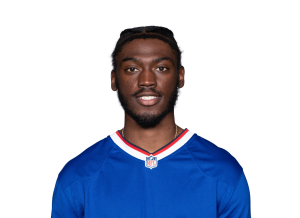
Isaiah
Coulter.
 Rhode Island· 6'2"· 198 lb· 4.45s 40
"An FCS speed merchant with a converted tight end's route tree, drafted on testing numbers and a 1,039-yard season, then handed a rookie year on injured reserve."Pre-draft read
Coulter is a tall, fast outside receiver who was the entire passing game at Rhode Island. At 6-2 and 198 with a 4.45 forty, he ran vertical routes and back-shoulder fades against FCS corners who could not match his length or his speed, and he produced seven career 100-yard games including a 12-catch, 171-yard afternoon at Brown.
He was still raw as a route runner. A converted high school tight end who came to URI as a project, he lined up almost exclusively outside because of thin depth and won mostly with straight-line speed and catch radius rather than a full tree. He is a willing hands catcher with real tracking ability, but his releases against press and his tempo on breaking routes were both unfinished.
Vertical passing offense with a patient receiver room that can redshirt a developmental Z behind established starters
Year 1 practice squad or fifth receiver learning a full route tree; ceiling is a No. 3 outside receiver who wins vertically and on back-shoulder throws
A timing-based quick game that demands precise route depth and immediate contribution from a rookie
He needed exactly the stable developmental year that injured reserve and an August release took away.
BIG Play ZAY: Rhode Island WR Isaiah Coulter Highlights
Pre-draft cut-up of his 1,039-yard junior season, vertical wins and downfield tracking.
Houston Texans WR Isaiah Coulter College Highlights: University of RI NFL Draft Pick
Post-draft reel covering his three Rhode Island seasons.
2017 FB Recruit - Isaiah Coulter
Recruiting feature on the converted tight end who became the program's first draft pick since 1986.
Coulter is a Brandywine, Maryland product who played tight end in a triple-option high school offense and arrived at Rhode Island largely on his cousin Aaron Parker's recommendation. He caught 18 passes for 212 yards and a touchdown as a freshman in 2017, then started all 11 games in 2018 for 42 catches, 604 yards and three scores.
The junior year turned him into Rhode Island's first NFL draft pick since 1986. He caught 72 passes for 1,039 yards and eight touchdowns in 12 games, becoming the seventh Ram ever to break 1,000 receiving yards in a season, and earned second-team All-CAA honors despite a 2-10 team. He hurt Virginia Tech for nine catches and 152 yards, and declared for the draft in December with a year of eligibility left.
Then he tested. At the combine he ran 4.45 at 6-2, 198 with a 36-inch vertical, confirming the traits the FCS tape suggested. Boards read him as a developmental Z with a legitimate athletic base and a thin resume against real competition. Houston, restocking a receiver room after trading DeAndre Hopkins, spent the 171st pick on the upside.
- 01
Speed at size
Ran 4.45 at 6-2, 198 with a 36-inch vertical, an athletic profile that holds up against NFL corners regardless of the competition he faced.
- 02
Downfield tracking
Locates and adjusts to deep balls naturally, which produced seven career 100-yard games and a 14.4-yard average both junior and sophomore years.
- 03
Production jump
72 catches for 1,039 yards and eight touchdowns as a junior on a 2-10 team, carrying an offense defenses schemed to stop him.
- 04
Catch radius
Long frame and strong hands away from his body give the quarterback a target on back-shoulder and boundary throws.
- 05
Development curve
A high school tight end in a triple-option offense who became an All-CAA receiver in three years, evidence of real learning speed.
- 01
Route tree
Lived on verticals and fades outside because of thin depth; little tape running the option and intermediate routes NFL Z receivers need.
- 02
Level of competition
FCS corners could not match his length or speed, which inflated the separation and hid how little technique he needed to win.
- 03
Press releases
Gets stalled at the line by physical corners and does not yet have a reliable answer with his hands or his feet.
- 04
Play strength
Listed at 198 on a long frame and loses contested reps against defensive backs who are willing to be physical through the route.
Relative Athletic Score (Kent Lee Platte) benchmarks combine/pro-day numbers against every measured prospect at the position since 1987. 10.00 is elite; 5.00 is average.
— — — positional median (p50)
- 40 yd
- 4.45sp50
- Vertical
- 36inp50
- Broad jump
- 121inp50
- Three-cone
- 7.28sp50
- Shuttle
- 4.62sp50
- Bench
- —rep
| Yr | Team | G | Rec | Yds | TD |
|---|---|---|---|---|---|
| 2017 | Rhode Island | 11 | 18 | 212 | 1 |
| 2018 | Rhode Island | 11 | 42 | 604 | 3 |
| 2019 | Rhode Island | 12 | 72 | 1039 | 8 |
| Career | — | 34 | 132 | 1855 | 12 |
Season lines come from the Rhode Island athletics bio and the Draft Scout profile, which lists the 2017 freshman year as 18 catches for 212 yards and a touchdown in 11 games with four starts. Career totals are the sum of the three published seasons.
A dash means the figure is not published by a source we trust — never a zero we invented.
Big, fast field-stretcher whose value stays tied to the deep ball and the fourth receiver role.
Tall, fast small-school receiver who developed into a long-term vertical starter in the right offense.
Fifth-round receiver with size who never established a role and washed out inside two seasons.
Everything above is the pre-draft evaluation. This section is what actually happened — updated year over year.
He never got on the field. Houston put him on injured reserve before the 2020 opener, activated him in late October, and he appeared in one game without a target. The Texans released him in August 2021. Chicago signed him, cut him, re-signed him to the practice squad, and elevated him twice; he played two games in 2021, drew a single target and never caught an NFL pass. He spent 2022 bouncing between the Bears roster, the Bears practice squad and Buffalo's practice squad, and his career line stands at three games and zero receptions.
The risk in the profile was exactly the risk that materialized. He was a converted tight end who learned receiver against FCS corners and needed years of route development in a stable environment, and he never got one: a lost rookie season on injured reserve, a release the following August, and then the practice-squad treadmill, where nobody teaches you to run routes. The speed and the catch radius were real. Everything that needed coaching never got coached.