Darrell
Taylor.
Darrell
Taylor.
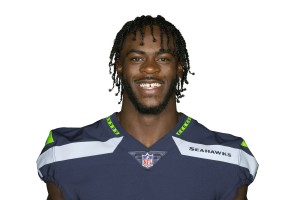
 Tennessee· 6'4"· 267 lb
"A late-blooming SEC edge rusher whose last two seasons produced 16.5 sacks on effort, length and a relentless motor, and whose medical file did as much to set his draft slot as any of that tape."Pre-draft read
Stand-up and hand-in-the-dirt edge defender who rushed from both sides in Tennessee's front and spent his last two seasons as the Volunteers' primary pressure source. Wins with length, a long-arm stab and a motor that keeps the rush alive after the first move fails. Converts speed to power better than his frame suggests.
His second gear is the chase: he runs down plays from the backside and finishes at the ball, which is where several of his six career forced fumbles came from. Against the run he sets a firm edge with his hands but can be washed inside by down blocks. The athletic profile is long and loose rather than explosive, and the signature is volume of effort rushes that eventually break a tackle's technique.
Four-man front with a defined edge rotation; works in odd fronts as a stand-up rusher
Year 1 designated pass rusher on obvious passing downs while the medical clears and the run defense catches up; ceiling is a full-time starting edge who produces eight to ten sacks and strips the ball.
A two-gap scheme that asks him to read and hold against tight-end surface blocks on early downs, or a front that gives him no rotation and expects 900 snaps.
Value climbs when he is paired with a stout interior that keeps offensive linemen from climbing to him on run downs.
Darrell Taylor || Tennessee Vols Utility || 2019 Highlights
Senior-season reel showing the long-arm rush, the chase gear and the edge alignments he rushed from.
Darrell Taylor 2021 Highlights
First NFL season in Seattle after missing his rookie year, with the 6.5 sacks that validated the traits.
A 6-4, 267-pound edge from Hopewell, Virginia who redshirted, grew slowly and then turned into Tennessee's best pass rusher over his final two seasons. He is a length-and-effort player: long arms to keep blockers off his chest, a functional long-arm and rip, and a relentless pursuit gear that shows up on backside plays. The rush plan is still developing, but the tools and the temperament are real.
The arc is the story. Nine tackles as a redshirt freshman, then 27 tackles with three sacks and a two-game suspension in 2017, then a team-leading eight sacks and 11 TFL in 2018, then 46 tackles, 10 TFL and 8.5 sacks as a redshirt senior, tied for second in the SEC. Career totals landed at 118 tackles, 26 TFL and 19.5 sacks with six forced fumbles. The flags were the two-year sample for the production, a run-defense profile that could get displaced, and a stress fracture in his leg that required offseason surgery and kept him out of every Combine drill.
The board saw a second-round edge with third-round polish and first-round length, discounted by medical uncertainty. Seattle took him at 48 knowing he might not be ready in year one, betting on the traits and the two years of rush production.
- 01
Length and hand placement
Uses 33-inch arms and a long-arm stab to keep tackles off his frame and control the rep before he decides on a counter.
- 02
Relentless motor
Chases plays from the backside and finishes at the ball, which turned into six career forced fumbles and a stream of effort sacks.
- 03
Two-year production spike
16.5 sacks and 21 tackles for loss across his final two seasons, with 8.5 sacks tied for second in the SEC as a senior.
- 04
Speed-to-power conversion
Converts a full-speed run-up into a bull rush that walks tackles back, giving him a win that does not require a clean edge.
- 05
Alignment flexibility
Rushed from both sides standing up and with a hand down, so a defense can move him to attack a specific tackle each week.
- 01
Medical uncertainty
A leg stress fracture required offseason surgery and kept him out of every Combine drill, leaving teams to project his athletic testing.
- 02
Run-defense inconsistency
Sets the edge with his hands but gets washed inside by down blocks, so early-down snaps may need a heavier partner next to him.
- 03
Thin rush arsenal
Leans on long-arm and effort rather than a developed counter package, which good tackles can take away once the first move fails.
- 04
Short production window
Two of his four playing seasons produced almost all of his disruption, so the sample backing the projection is narrow.
| Yr | Team | G | Tkl | Sk | Int | PD | FF |
|---|---|---|---|---|---|---|---|
| 2016 | Tennessee | 8 | 9 | 0 | 0 | 1 | 0 |
| 2017 | Tennessee | 10 | 27 | 3 | 0 | 2 | 2 |
| 2018 | Tennessee | 12 | 36 | 8 | 0 | 0 | 3 |
| 2019 | Tennessee | 13 | 46 | 8.5 | 0 | 4 | 1 |
| Career | — | 43 | 118 | 19.5 | 0 | 7 | 6 |
Sports-Reference totals include bowl games; season sums match the career line exactly (118 tackles, 26 TFL, 19.5 sacks, 7 PD, 6 FF, 4 FR). He redshirted in 2015. Some accounts list 26.5 TFL and 38 games; the season-by-season ledger used here sums to 26 TFL in 43 games.
A dash means the figure is not published by a source we trust — never a zero we invented.
A productive sub-package rusher who collects six to nine sacks in the right role and fights the medical file.
The version where the counters develop and he becomes a full-time starting edge worth a second contract.
A rotational speed rusher who bounces between teams and lives on situational snaps.
Everything above is the pre-draft evaluation. This section is what actually happened — updated year over year.
The medical flag cost him a full season: he never played as a rookie in 2020, spending the year on the non-football injury list recovering from leg surgery. He arrived in 2021 as a rotational rusher and stayed useful for three years in Seattle, with 6.5 sacks in 2021, a career-best 9.5 sacks and four forced fumbles in 2022, and 5.5 sacks in 2023 while playing all 17 games. Seattle let him leave in free agency and Chicago signed him for 2024, where he played 16 games with three sacks in a smaller role. He landed in Houston in 2025 and appeared in only four games without recording a sack, which left his career at 69 games, 126 tackles, 24.5 sacks and eight forced fumbles.
In hindsight this was close to a fair second-round outcome, just without the second contract that usually follows. The traits held up — the motor and the length produced a legitimate 9.5-sack season and consistent pressure in a good defense — but the rush plan never widened, and once the effort wins dried up there was no technique to fall back on. He was a productive rotational starter for three seasons, which is real value at pick 48, and then the market moved past him faster than the sack numbers suggested it would.
Data note: from NY Jets