Danny
Pinter.
Danny
Pinter.
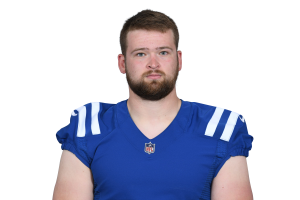
 Ball St.· 6'4"· 306 lb· 4.91s 40
"A tight end who spent two years learning tackle and still blocked like one of the best in the country — the traits were obvious, the technique was the bet."Pre-draft read
Pinter is an interior blocker built out of a tight end frame, and the position switch shows up in how he moves. He fires off low with quick, choppy feet, reaches the second level in a hurry, and finishes combos with hands inside and hips squared. Ball State ran heavy zone and let him climb to linebackers on angles most tackles cannot take.
The second trait is recovery athleticism. He redirects late, mirrors twitchy interior rushers and pulls cleanly on gap concepts. He is a better run blocker than pass protector at this stage, with functional anchor rather than elite raw power, and his testing numbers land among the best in this offensive line class. The signature is positional flexibility: tackle, guard or center, all learned fast.
Zone-based rushing offense with pull-heavy gap complements
Year 1 swing interior backup and jumbo/special-teams contributor; ceiling is a multi-year zone-scheme starter at guard or center
A power-gap, drive-block offense that asks him to win one-on-one displacement against 330-pound nose tackles on early downs
Value is concentrated in the ability to cover three interior spots on game day.
Football: Pinter Moves to Tackle
Program feature on the tight end to right tackle conversion that defined his evaluation.
O-Lineman Danny Pinter gets a touchdown???
The tackle-eligible lateral touchdown against Central Michigan in 2019.
Danny Pinter Highlights vs Jets
NFL interior blocking reel showing his climb to the second level in the Colts zone scheme.
Pinter is a developmental interior lineman with an unusual resume. He arrived at Ball State as a tight end, caught nine passes over two seasons, lost most of 2017 to a foot injury that required surgery, added fifty pounds, and moved to right tackle in 2018. Two years later he was one of the more efficient run blockers in the FBS. Evaluators saw an athlete playing a position he had barely learned, both the appeal and the risk.
The production backs the tape. He started all twelve games at right tackle in both 2018 and 2019 and earned first-team All-Mid-American Conference honors as a senior, along with his program award as most outstanding player. He even scored on a tackle-eligible lateral against Central Michigan. The flags are the obvious ones for a converted player: thin technical foundation, hands that fly outside the frame against longer rushers, and a body that is still filling out. He tested at the top of the class, confirming what the film suggested about movement skill.
The board read him as a Day 3 project with a starting floor inside, exactly the profile a zone-heavy offense with patience should buy. Indianapolis, with a veteran line already in place, could take the athlete and develop him behind it. At 149 that is a sensible bet on traits, coaching and time.
- 01
Movement skill
Rare feet for an interior lineman, with the short-area quickness to climb to linebackers on zone and to pull across the formation without losing balance.
- 02
Run-block efficiency
Posted one of the best run-blocking grades in the FBS in 2019, finishing combos with inside hands and squared hips rather than falling off at contact.
- 03
Testing profile
Ran 4.91 with 24 bench reps, a 110-inch broad jump and a 7.76 three-cone, an athletic package near the top of the 2020 offensive line class.
- 04
Positional flexibility
Learned tackle in two years after playing tight end, then handled center and guard as a pro, which is the exact value a backup lineman must offer.
- 05
Competitive temperament
Plays with a finisher mentality and a mean streak that his coaches highlighted, and he was voted his program most outstanding player as a senior.
- 01
Technical foundation
Only two seasons of offensive line reps, so hand placement, timing and pass sets are still being built rather than refined.
- 02
Anchor strength
Functional but not powerful at the point of attack, and long bull rushers can walk him backward before he resets his base.
- 03
Length concerns
Tight end frame means he can lose the hand-fighting battle against longer interior rushers who get into his chest first.
- 04
Level of competition
Mid-American Conference tape did not test him weekly against the size and violence he would face on Sundays.
Relative Athletic Score (Kent Lee Platte) benchmarks combine/pro-day numbers against every measured prospect at the position since 1987. 10.00 is elite; 5.00 is average.
— — — positional median (p50)
- 40 yd
- 4.91sp50
- Vertical
- 29.5inp50
- Broad jump
- 110inp50
- Three-cone
- 7.76sp50
- Shuttle
- 4.62sp50
- Bench
- 24repp50
| Yr | Team | G |
|---|---|---|
| 2016 | Ball State | 12 |
| 2017 | Ball State | 7 |
| 2018 | Ball State | 12 |
| 2019 | Ball State | 12 |
| Career | — | 43 |
Redshirted 2015. Played tight end in 2016 and 2017 (nine career receptions) before converting to right tackle in 2018; 24 starts at right tackle and 11 at tight end. First-team All-MAC in 2019.
A dash means the figure is not published by a source we trust — never a zero we invented.
Athletic zone-scheme backup who covers center and guard and starts in stretches.
Late-round interior lineman who turned scheme fit and versatility into a long run of starts at center.
Useful swing lineman whose technical ceiling caps him as a spot starter.
Everything above is the pre-draft evaluation. This section is what actually happened — updated year over year.
Indianapolis kept Pinter inside and kept him developing. He played thirteen games as a rookie in 2020 with one start, mostly on special teams and as a swing interior piece. In 2021 he appeared in sixteen games with three starts, including work at center, and even caught a two-yard touchdown on a tackle-eligible call. In 2022 he played all seventeen games with three starts at right guard, his most extensive offensive snap load. A preseason injury put him on injured reserve for the entire 2023 season. He re-signed with the Colts in 2024 and appeared in fourteen games with two starts, then played all seventeen in 2025 with one start. He signed with Baltimore in March 2026 and landed on injured reserve that August.
In hindsight the pick did what a fifth-round offensive lineman is supposed to do. Pinter never became a fixture, with ten career starts across five seasons, but he stayed on a roster for six years, covered three interior spots and gave Indianapolis real value as a backup who could play immediately when called. The ceiling that the athletic testing suggested never arrived, largely because the technical catch-up from tight end was longer than the runway. As a Day 3 return, a durable swing lineman with two teams and 77 games is a clear win on cost.