
Casey
Toohill.
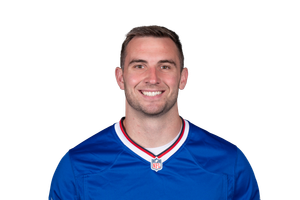
Casey
Toohill.
 Stanford· 6'4"· 250 lb· 4.62s 40
"Philadelphia drafted Stanford's high-motor edge at No. 233, waived him as a rookie, and watched him become a Washington rotational end with eight NFL sacks and a touchdown."Pre-draft read
Toohill was an outside linebacker in Stanford's 3-4 front, a 6-4, roughly 250-pound edge who rushed from a two-point stance and dropped into coverage when asked. His primary trait was effort-driven pass rush: he used length, a well-timed get-off and relentless pursuit to finish with a team-high eight sacks and 11.5 tackles for loss as a fifth-year senior.
His secondary trait was football intelligence, reading run fits and setting a disciplined edge rather than freelancing. He was not a bendy, explosive athlete, winning more with angles and hustle than speed. His signature was the motor and timing of a player who did his best work late in plays.
Four-man front with wide alignments or a 3-4 that lets a long, high-motor edge rush from a two-point stance and set the edge.
Year 1: core special teams player and rotational edge. Ceiling: starting-caliber rotational end in a deep line.
Two-gap front that asks its ends to hold up against double teams and play head-up on tackles every down.
His motor and length fit best in an attacking, one-gap front.
Casey Toohill with a Tackle For Loss vs. Arizona Cardinals
A backfield stop in the NFL.
Washington Commanders Casey Toohill on his endzone dance that wrapped up the MNF victory over Philly
His fumble-return touchdown against Philadelphia in 2022.
Stanford's Walter Rouse, Casey Toohill talk about their freshman year roommates
Stanford feature from his college years.
Toohill projected as a high-effort, high-IQ edge whose lack of elite burst made him a late-round developmental rusher. Evaluators liked his length, motor and versatility as a stand-up linebacker who could rush, set the edge and drop, but saw a limited athlete without a refined pass-rush plan.
He played a reserve role for three seasons, started five of seven games in an injury-shortened 2018, then broke out in 2019, starting all 12 games with a team-high eight sacks and 11.5 tackles for loss and earning second-team All-Pac-12 honors. He was also a William V. Campbell Trophy finalist. The flags were only one season of starter production, a thin frame for a hand-down end and limited bend around the corner.
Most boards viewed him as a late-round rotational edge and special teams player. Philadelphia took him at No. 233, valuing his length and motor as a depth rusher who could grow into a role. His academic profile and special teams background suggested a player who would learn quickly and earn snaps on coverage units while his pass-rush plan developed.
- 01
Relentless motor
Chased plays from the backside and finished late, a big reason he led Stanford with eight sacks and 11.5 tackles for loss in 2019.
- 02
Length
Used long arms to keep tackles off his frame, set a firm edge against the run and disrupt passing lanes when he could not get home.
- 03
Football intelligence
A William V. Campbell Trophy finalist who played disciplined run fits and rarely lost contain on the edge.
- 04
Versatility
Rushed from a two-point stance, set the edge and dropped into coverage in Stanford's 3-4 front, fitting several NFL roles.
- 05
Special teams value
Blocked two kicks in his career, including a PAT in 2019, and profiled as a core coverage player early on.
- 01
Limited burst
Lacked the explosive first step to beat NFL tackles around the corner consistently, relying on effort and timing instead.
- 02
Stiff hips
Struggled to bend and flatten at the top of his rush, which limited his ability to finish against athletic tackles.
- 03
Thin production
Only one season of starter-level production, with 6.5 sacks combined across his first three seasons at Stanford.
- 04
Undersized as an end
At about 250 pounds he could be washed out by bigger tackles when asked to play with his hand in the dirt.
Relative Athletic Score (Kent Lee Platte) benchmarks combine/pro-day numbers against every measured prospect at the position since 1987. 10.00 is elite; 5.00 is average.
— — — positional median (p50)
- 40 yd
- 4.62sp50
- Vertical
- 39inp50
- Broad jump
- 126inp50
- Three-cone
- 7.08sp50
- Shuttle
- 4.21sp50
- Bench
- 17repp50
| Yr | Team | G | Tkl | Sk | Int | PD | FF |
|---|---|---|---|---|---|---|---|
| 2016 | Stanford | 11 | 20 | 2.5 | 0 | 0 | 0 |
| 2017 | Stanford | 11 | 18 | 1 | 0 | 0 | 0 |
| 2018 | Stanford | 7 | 28 | 3 | 0 | 3 | 0 |
| 2019 | Stanford | 12 | 57 | 8 | 0 | 1 | 1 |
| Career | — | 41 | 123 | 14.5 | 0 | 4 | 0 |
Seasons from CFBTrack, including bowl games, which sum to 123 tackles, 22 TFL and 14.5 sacks. Stanford credits him with 60 tackles in 2019 and 29 in 2018; Wikipedia lists 124 tackles, 21.5 TFL, 14 sacks and one interception, which no season-level source confirms, so ints are kept at the season-level figure.
A dash means the figure is not published by a source we trust — never a zero we invented.
The realized outcome: a rotational end and special teams player for five seasons.
Smart, effort-first edge who became a productive rotational rusher.
Late-round edge whose college production never translated to the NFL.
Everything above is the pre-draft evaluation. This section is what actually happened — updated year over year.
Philadelphia waived Toohill during his rookie season, and Washington signed him to finish 2020. Over four years there he tallied 78 tackles, seven sacks and three fumble recoveries, including a fumble-return touchdown that sealed a Monday night win over the Eagles in 2022. In 2023 he started eight of 16 games and set a career high with five sacks. He signed with Buffalo for 2024 and joined Houston in 2025, having played 71 games with eight sacks through 2024.
In hindsight the pick was a win, just not for the team that made it. The limited burst evaluators flagged kept him from becoming a full-time starter, but the motor, length and intelligence they praised made him a reliable rotational end and special teams player for five seasons. Most seventh-round edges never reach 71 games, and his 2023 breakout showed the upside that effort and timing can unlock when a player gets steady snaps. He became a useful rotational end for the franchise that claimed him.