Cameron
Clark.
Cameron
Clark.
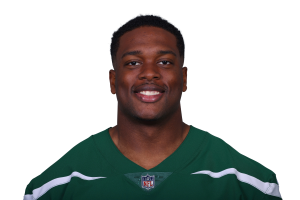
 Charlotte· 6'4"· 308 lb· 5.29s 40
"The all-time games-played leader at Charlotte and a two-time captain who never missed a college game — a nasty, versatile finisher whose NFL home was always going to be inside at guard."Pre-draft read
Clark is a 6-4, 308-pound left tackle with a finisher's temperament. He is a heavy-handed, aggressive blocker who plays through the whistle and looks to bury defenders in the run game, and he anchored a line that led its conference in rushing at 203 yards a game.
He is durable and technically grounded, a starter who never missed a game and whom his coaches saw at tackle, guard or center, and he protects best with a quick, compact set against power. The concerns are pad level and discipline: he plays tall at times and drew too many penalties, and at 6-4 with short-side length his long-term NFL home projected inside at guard rather than on the edge. The signature is nastiness plus versatility, a swing interior lineman with starter toughness.
A gap-and-power run scheme that lets an interior lineman fire off the ball, double team and finish defenders on down blocks.
Year 1 interior backup learning guard after a college career at left tackle, with a ceiling as a starting guard in a power scheme that rewards his temperament.
A pure wide-zone offense that asks its guards to reach-block three-techniques and climb to linebackers in space every snap.
2018 Charlotte 49ers - Cameron Clark
Junior-season cutup of his work at left tackle for Charlotte.
New York Jets Add More Beef With Cameron Clark - Film Breakdown
Post-draft film breakdown of his hands, pad level and projected move inside.
The Call: Charlotte T Cameron Clark Learns He's Headed To The Jets
Draft-day call for the first player ever drafted by the Jets out of Charlotte.
Clark is the best player his program ever produced. A Greensboro, North Carolina, product who stayed close to home at Charlotte, he became the face of a program still building itself — a two-time team captain and the school's all-time games-played leader with 49.
His body of work was one of pure availability and steady improvement. His teammates voted him the offensive MVP as a sophomore in 2017, a rare distinction for a lineman. He started all twelve games at left tackle in 2018 and thirteen more there in 2019, closing his career with 31 consecutive starts including the program's first bowl appearance. He was first-team all-conference by the league's coaches as a senior and anchored the line for a team that set school records with seven wins and five conference wins while leading the conference in rushing.
The evaluation was about position and polish, not talent. He played exclusively at left tackle in college but at 6-4 with a thick lower half he projected to guard in the NFL, and evaluators flagged his pad level and his penalty count. What they liked was the finishing temperament, the durability and the flexibility to play three spots. The Jets, who had already taken a tackle eleventh overall, used a pick acquired from New England on him at 129.
- 01
Finishing temperament
A nasty, through-the-whistle blocker who looks to bury defenders rather than simply stay attached to them.
- 02
Interior versatility
His coaches projected him at tackle, guard or center, the three-position flexibility that day-three linemen need.
- 03
Durability
Never missed a game in college and set the school record with 49 appearances, closing with 31 consecutive starts.
- 04
Run-blocking production
Anchored an offensive line that led its conference in rushing at 203 yards a game during his senior season.
- 05
Leadership
A two-time team captain and the voted offensive MVP as a sophomore, the face of a program in the middle of a rebuild.
- 01
Pad level
Plays tall out of his stance, which lets defenders get under his hands and stall him at the point of attack.
- 02
Penalties
Drew too many flags in college, a discipline issue that gets magnified against faster NFL edge rushers.
- 03
Length for tackle
At 6-4 he lacked the reach to stay outside long term, so the projection was a move inside to guard.
- 04
Level of competition
Faced Conference USA defensive fronts and had not been tested by the speed he would see every Sunday.
Relative Athletic Score (Kent Lee Platte) benchmarks combine/pro-day numbers against every measured prospect at the position since 1987. 10.00 is elite; 5.00 is average.
— — — positional median (p50)
- 40 yd
- 5.29sp50
- Vertical
- 25inp50
- Broad jump
- 101inp50
- Three-cone
- —s
- Shuttle
- —s
- Bench
- 26repp50
| Yr | Team | G |
|---|---|---|
| 2016 | Charlotte | — |
| 2017 | Charlotte | — |
| 2018 | Charlotte | 12 |
| 2019 | Charlotte | 13 |
| Career | — | 49 |
Charlotte's draft release credits him with a school-record 49 career games and 31 consecutive starts to close his career, including the 2019 Bahamas Bowl. The Jets release confirms twelve starts at left tackle in 2018 and thirteen in 2019. His full career start total and his 2016 and 2017 lines were not published and are left empty. Offensive linemen are tracked by games and starts only.
A dash means the figure is not published by a source we trust — never a zero we invented.
A versatile interior lineman who plays all three spots and starts when the line needs him.
The ceiling: a heavy-handed power guard who starts for a decade and dominates in the run game.
A college tackle whose move inside never takes and whose career is cut short by injuries.
Everything above is the pre-draft evaluation. This section is what actually happened — updated year over year.
He never played a regular-season snap, and it had nothing to do with football. Clark's rookie year in 2020 was lost to injury: back-to-back shoulder problems put him on injured reserve for the first six weeks, then a knee injury followed, and he was inactive for seven games and did not dress for three more. The organization called it a developmental year.
Six days into 2021 training camp he went down during an eleven-on-eleven pass-protection rep after colliding with a defensive end, lay motionless on the field for close to ten minutes and was carted off in an ambulance. He had no feeling in his lower extremities for two hours. The team called it a spinal cord contusion and expected a full recovery, but a second opinion from a spine specialist diagnosed transient quadriplegia and told him there was a fifty percent chance it would recur on every snap, with no guarantee the feeling would come back the next time. In February 2022, at 24, he ended his career. There is no evaluation to revisit here — a durable four-year starter who never missed a college game lost the sport to an injury no scouting report could have anticipated.