Cam
Brown.
Cam
Brown.
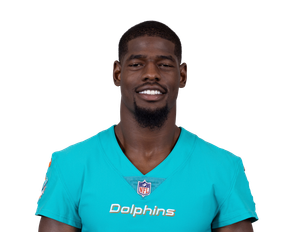
 Penn St.· 6'5"· 233 lb· 4.72s 40
"Brown is a linebacker built at the exact height where length stops being an advantage and starts being a question nobody on a defensive staff wants to answer."Pre-draft read
Brown is a 6-foot-5 linebacker built like a basketball wing, and everything about his game runs through length and speed. He covers ground in a hurry chasing sideline to sideline, and the arms let him disrupt throwing lanes and wrap up ball carriers outside his frame. Penn State moved him around — off the ball, on the edge, over the slot — because he could run with anyone on the field.
The second trait is special-teams value: he was a core cover man and blocked a punt in college. What he lacks is bulk and pop. At 233 pounds he gets swallowed by guards on the second level and cannot hold up when a blocker reaches him first. He plays fast in space and disappears in traffic.
Nickel-heavy defense that uses a rangy third linebacker in coverage and asks its special teams to carry a roster spot
Year 1 core special-teams contributor with sub-package coverage snaps; ceiling is a nickel linebacker who runs with tight ends and backs in space.
A downhill run-stopping front that needs its linebackers to take on pulling guards and fill A-gaps against heavy personnel.
Cam Brown Penn State Highlight Mix
A career cutup showing the range, length and coverage disruption that defined his Penn State tape.
Freshman Cameron Brown highlights 2016-17, Penn State linebacker
His early Penn State work, when the size-speed combination first stood out in the Big Ten.
Penn State LB Cam Brown Spring Game Highlights
Spring-game reps that show the movement skill and the frame questions side by side.
Brown was a four-year Penn State contributor whose length made him one of the more unusual linebacker projections in the class. He played 50 career games with 26 starts, finishing with 199 tackles, 17 tackles for loss, 5.0 sacks, 11 passes defensed, four forced fumbles and two fumble recoveries. As a senior he was a team captain, started 12 games, and earned All-Big Ten third-team honors from the coaches along with Phil Steele and Pro Football Focus third-team recognition.
The evaluation was about a body type without a clean position. He measured 6-foot-5 and 233 pounds, extraordinary length for an off-ball linebacker but far too light for the edge, and there was no obvious NFL role where the length paid without the weight costing. On tape he was excellent running down plays in space and genuinely disruptive in coverage windows, and just as clearly a liability when an offensive lineman got hands on him.
Boards graded him as a developmental fifth-to-seventh-round athlete with elite special-teams value and an undefined defensive projection. The Giants, rebuilding the back seven under a new staff, took the traits at 183 and immediately put him on coverage units.
- 01
Rare length
6-foot-5 with arms that let him tackle outside his frame, knock down passes and take away throwing lanes off the ball.
- 02
Range in space
he covers ground sideline to sideline and chases plays from the back side, the trait that kept him on the field at Penn State.
- 03
Coverage disruption
11 career passes defensed from a linebacker spot, the product of length and enough speed to carry tight ends up the seam.
- 04
Special-teams value
a core cover man who blocked a punt in college and profiled as an immediate contributor on all four units in the NFL.
- 05
Positional versatility
Penn State lined him up off the ball, on the edge and over the slot, giving a defensive coordinator real matchup flexibility.
- 01
Play strength
at 233 pounds on a 6-foot-5 frame he gets absorbed by guards climbing to the second level and cannot shed once engaged.
- 02
Run-fit discipline
he plays over the top of blocks rather than through them, which turns interior runs into free lanes when he is the fill defender.
- 03
Pad level
the height works against him at the point of attack, forcing him to bend a long frame to get under blockers and ball carriers.
- 04
No defined NFL position
too light for edge, too thin to stack inside, which left every team projecting a role rather than grading one.
— — — positional median (p50)
- 40 yd
- 4.72sp50
- Vertical
- 35.5inp50
- Broad jump
- 123inp50
- Three-cone
- —s
- Shuttle
- —s
- Bench
- 16repp50
| Yr | Team | G | Tkl | Sk | Int | PD | FF |
|---|---|---|---|---|---|---|---|
| 2016 | Penn State | 12 | 33 | 0.5 | 0 | 0 | 0 |
| 2017 | Penn State | 12 | 31 | 0.5 | 0 | 1 | 0 |
| 2018 | Penn State | 13 | 63 | 2 | 0 | 6 | 3 |
| 2019 | Penn State | 13 | 72 | 2 | 0 | 4 | 1 |
| Career | — | 50 | 199 | 5 | 0 | 11 | 4 |
Sports-Reference season lines including bowls; the four seasons sum exactly to the 50-game, 199-tackle, 17-TFL, 5.0-sack, 11-pass-defensed, four-forced-fumble, two-fumble-recovery career total. Miami media guide lists 51 career games, one more than Sports-Reference, so the Sports-Reference count is used throughout. Season starts are not published consistently, so only the official career figure of 26 starts is carried in prose.
A dash means the figure is not published by a source we trust — never a zero we invented.
Athletic, undersized second-level defender who lives on special teams and takes sub-package snaps without winning a starting job.
Long, rangy linebacker whose size-speed profile turns into a versatile, high-snap starting role in a nickel defense.
Traits linebacker who never gets a defensive role and stays on a roster purely on coverage-unit value.
Everything above is the pre-draft evaluation. This section is what actually happened — updated year over year.
The Giants got exactly what the grade said. Brown played 15 games as a rookie in 2020 with six tackles, a forced fumble and six special-teams tackles, taking 314 special-teams snaps against 92 on defense. From there the defensive role effectively vanished: 11 defensive snaps in 2021, three in 2022. He appeared in 12 games in 2021 around a stint on injured reserve and the COVID list, all 17 in 2022 with two postseason games, and 16 in 2023 with a forced fumble. Across four Giants seasons he played 60 games, never starting one, with six defensive tackles and 29 special-teams tackles. Miami signed him as an unrestricted free agent in April 2024, placed him on injured reserve that August, and he became a free agent again in March 2025.
In hindsight the pick did what a sixth-rounder is supposed to do, and no more. He gave the Giants four full seasons of quality coverage work and was never a liability. But the defensive projection never materialized — the strength limits that showed on Penn State tape were exactly as disqualifying in the NFL, and he finished his run with fewer defensive snaps in three years than most starters take in a month. A useful special-teams career from the sixth round is a fair return; it is also the whole story.